The molecules that set your spec set your compliance clock.
Free formaldehyde and free phenol carry regulatory weight on both sides of the Atlantic. Continuous measurement gives you a defensible, time-stamped data trail.
Composite wood compliance is set in the resin reactor.
US EPA TSCA Title VI limits formaldehyde emissions from composite wood products. Your resin is upstream of that limit: the number behind it - free formaldehyde - is set earlier, when the resin is cooked.
What the rules cover
TSCA Title VI sets formaldehyde emission limits for composite wood products on the US market. CARB ATCM 93120 adds per-batch documentation of free formaldehyde - product without that documentation does not move into the covered market.
Who it touches in the resin chain
UF resin is the dominant binder for MDF and particleboard - over 80% of the wood-resin market. Your resin's free HCHO is upstream of your customer's composite wood compliance - documented batch by batch.
What continuous measurement adds
The standard source of that figure is sulfite titration (EN 120): a manual sample every 10-20 minutes, a result 30-45 minutes later. An inline Raman probe reads free formaldehyde through the whole cook and writes a time-stamped record for every batch.
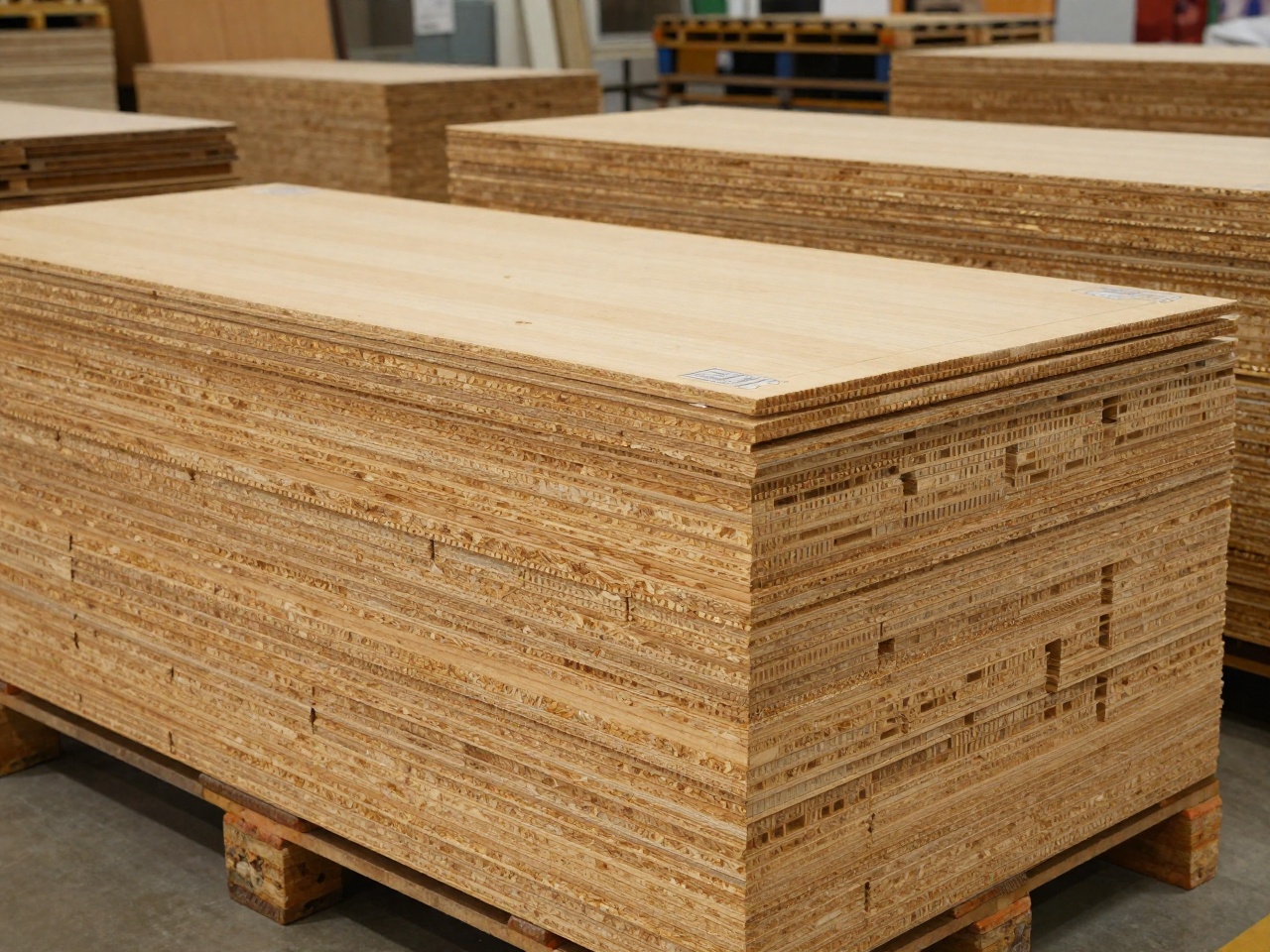
Phenol on the SVHC candidate list keeps residual phenol on every spec.
Phenol sits on the ECHA SVHC candidate list. The practical effect for PF producers is contractual: residual-phenol monitoring is written into buyer specifications across EU-facing supply chains.
What it covers
The candidate list places phenol under substance-of-very-high-concern review. The consequence downstream: residual phenol stays under scrutiny wherever the resin ends up in an EU-facing chain, and monitoring lands in the specifications of resin buyers.
Who it touches
Producers of novolak and resol PF resins - binders for wood-based panels, abrasives, foundry and laminates. Selling into EU-facing chains means monitoring and documenting residual phenol.
What continuous measurement adds
The reference method is offline HPLC: 20-40 minutes plus sample preparation, per data point. Inline Raman reads free phenol continuously during synthesis. Feasibility on real PF reaction mixtures put the mean absolute error around 0.03 pp against the reference method.
For formaldehyde itself, documentation travels with every delivery.
Formaldehyde is a CMR Cat. 1B substance. That classification shapes how formalin and urea-formaldehyde concentrate are produced, shipped and received - and how much paperwork moves with each tank.
A CoA with every delivery
Formalin (37-50% HCHO in water) is classified CMR Cat. 1B, and UFC above 25% HCHO carries the same classification. A certificate of analysis is mandatory for every delivery, for every recipient.
Worker exposure documentation
Directive 2004/37/EC requires documented worker exposure. The standard product check - sulfite titration to ISO 9020 - starts with a manual sample drawn from an HCHO stream. An inline probe takes that routine sampling out of the loop.
CEMS above 10 t HCHO/yr
The Industrial Emissions Directive drives continuous emissions monitoring for plants producing more than 10 t of formaldehyde per year. On the product side, the same plants typically still wait 30-45 minutes per titration for the concentration they ship.
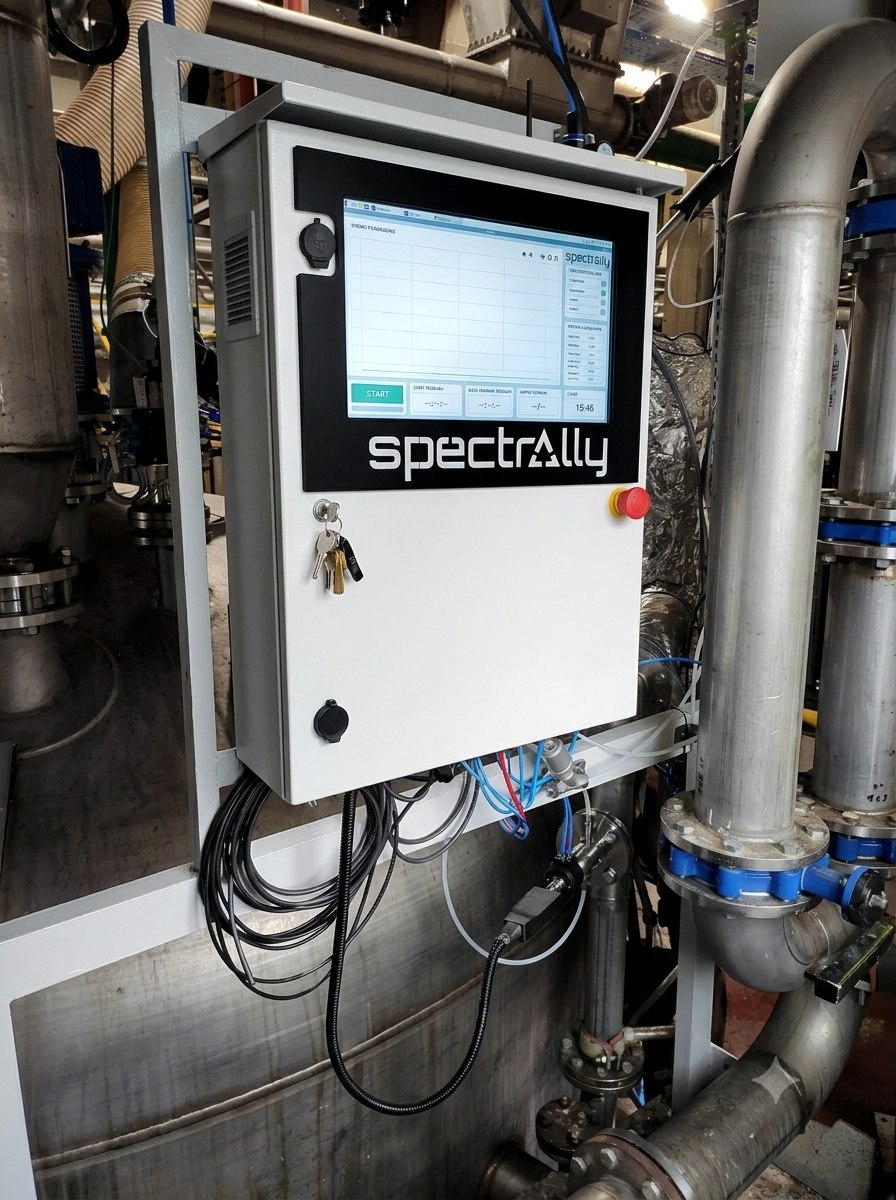
What the analyzer reads here
Spectrally X1 INLINE measures HCHO, methanol and paraformaldehyde directly in the line - during production, filling and storage. No sample is drawn from the formalin stream.
On the receiving side, the same measurement verifies each formalin or UFC delivery in 1-2 minutes, against a CoA that would otherwise take a 30-45 minute titration to check.
UFC composition varies batch to batch by ±5-10% on F/U between suppliers. Measured at receipt, that variance becomes a weigh-up correction - not a surprise after the charge is in the reactor.
The tightest limits arrive with the purchase order.
Regulation sets the frame. The working numbers - free formaldehyde, free phenol, molar ratio, emission class - come from resin buyers. Holding them batch after batch is where the measurement problem actually lives.
F/Ph variance between batches shows up as different resin reactivity at the customer. Residual-phenol monitoring is written directly into buyer specifications.
E0/E1 classes under EN 717-1 require documented resin composition. F/U drift that passes unnoticed in the reactor surfaces later as cure behavior on the customer's line.
EN 717-1 and EN 438-2 set E0/E1 classes for HPL laminates. A ±5% melamine dosing error moves both the batch margin and the emission class - and offline melamine HPLC takes 60-90 minutes.
Incoming composition varies by ±5-10% F/U between suppliers and batches. Without a fast check, the choice is to trust the CoA or wait 30-45 minutes for an in-house titration - with the charge already in the reactor.
The batch record, two ways
See the batch record your reactor would write.
Send representative samples from your PF, UF, MUF/MF or UFC process. We build and validate a chemometric model on your matrix and show the free formaldehyde and free phenol trail an inline probe would log for every batch - before any hardware decision.