Four chemistries. One measurement layer.
PF, UF, MUF/MF and UFC plus formalin - the condensation chemistries this mini-site covers, and what Spectrally reads in each of them.
One measurement layer, from methanol to shipped resin.
The formaldehyde value chain runs from methanol oxidation through formalin and UFC to the amino and phenolic resins built on them. Every step shares the same blind spot: composition is known 30-45 minutes after the sample leaves the line - up to 90 for melamine. Spectrally X1 INLINE puts one Raman measurement layer across all of it. A probe in the vessel or line, a chemometric model per matrix, values in your control system in seconds.
Methanol oxidation over silver or Fe-Mo catalyst. HCHO, methanol and paraformaldehyde read inline in production, filling and storage.
Urea-formaldehyde pre-solution at about 85% solids, F/U around 4.7. Composition verified in 1-2 minutes at receiving, or inline.
MDF, particleboard and HPL laminate binders. F/U and F/M/U molar ratio, free formaldehyde and urea conversion tracked live.
Phenol-formaldehyde condensation for wood panels, abrasives, foundry and laminates. Free monomers and the endpoint read in the reactor.
Phenolic resins: the endpoint decides the batch.
Novolak or resole, produced from phenol and formaldehyde in an aqueous or aqueous-organic reactor. The condensation has to stop at the right point: too early and the resin is under-condensed, too late and the batch over-condenses toward scrap. Residual phenol and formaldehyde are the quality parameters your customers specify.
From a 20-40 minute lag to a live curve.
Offline detection of residual phenol takes 20-40 minutes per sample. The reaction keeps running while the answer travels, and batch-to-batch F/Ph variance surfaces later as different reactivity at your customer. The probe reads the mixture where it reacts:
- F/Ph molar ratio, continuously through the cook
- Residual phenol and residual formaldehyde in real time
- Condensation endpoint - the batch stops on a measured value, not a time margin
PF media coat optical windows within days. The self-cleaning probe retracts into a rinse chamber between readings, so the signal holds through long campaigns. The probe tolerates pH 2-10 continuously - covering both the acidic novolak and the alkaline resole route.
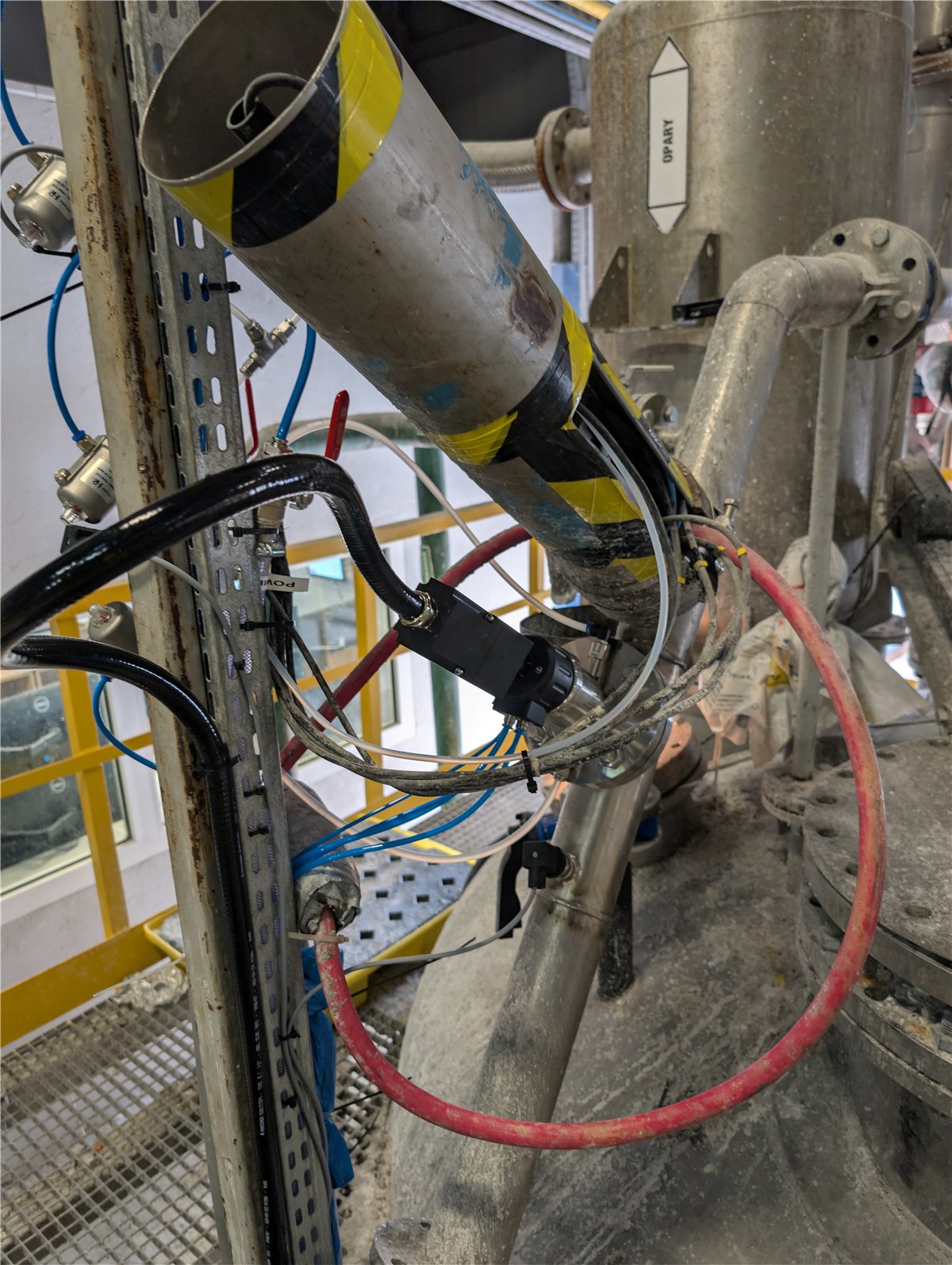
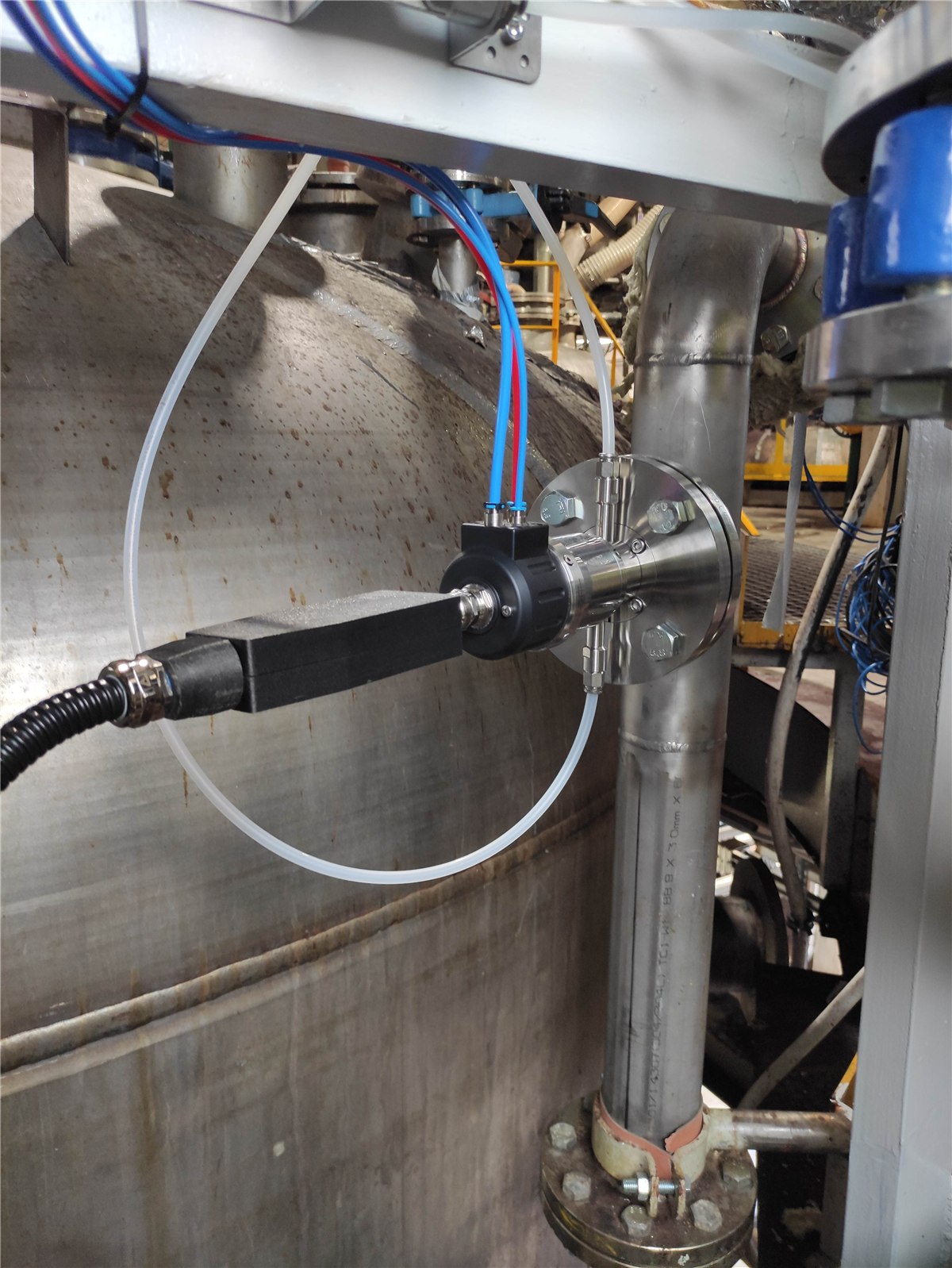
Phenol & formaldehyde during synthesis
Feasibility models on real PF reaction mixtures tracked phenol with a mean absolute error around 0.03 pp and formaldehyde around 0.21 pp versus the standard reference methods.
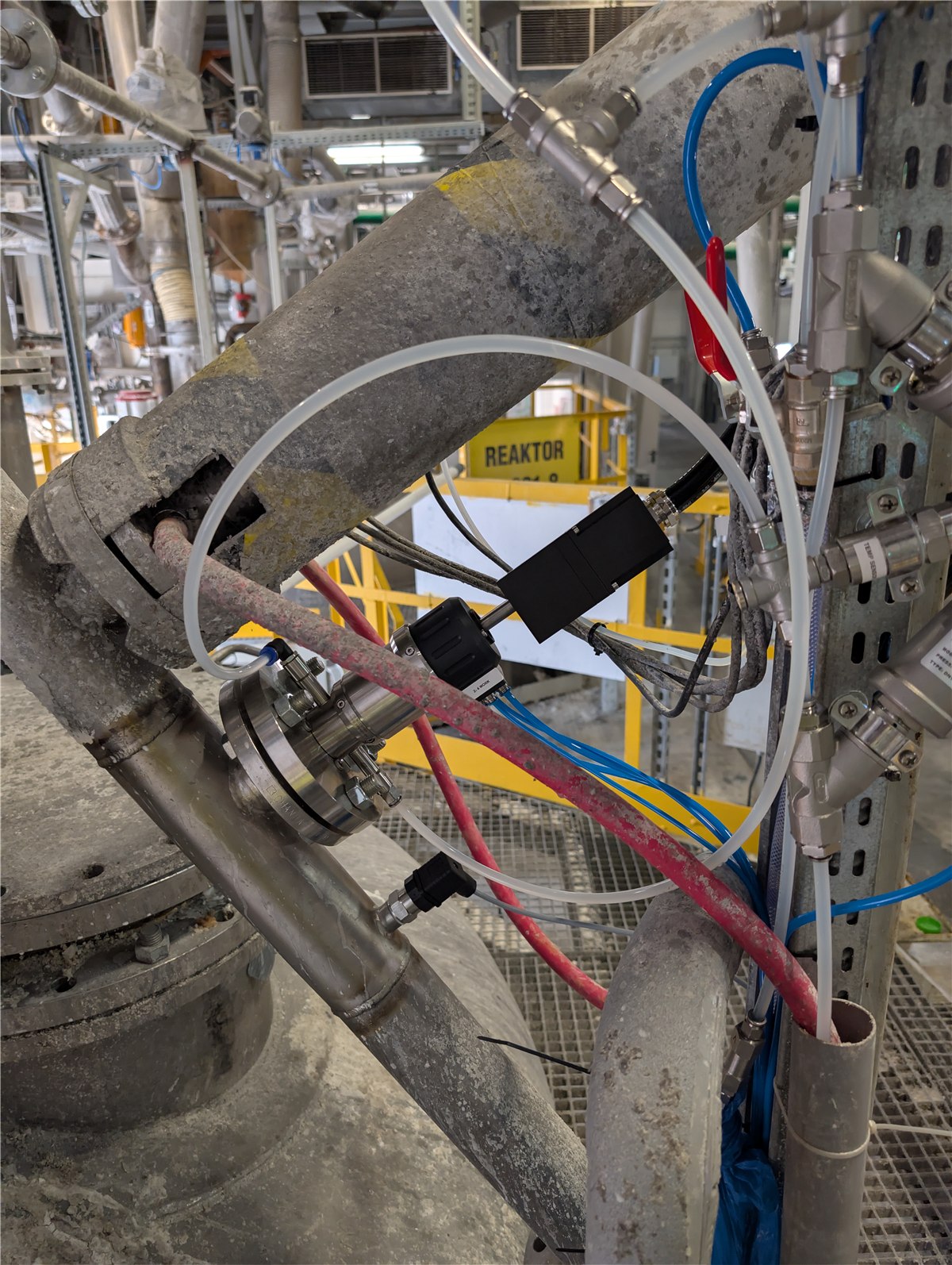
Viscosity across the full reaction
Regression models at R² > 0.99 with uncertainty around ±0.25 Pa·s - a live read on the condensation endpoint instead of a 10-minute offline sampling cycle.
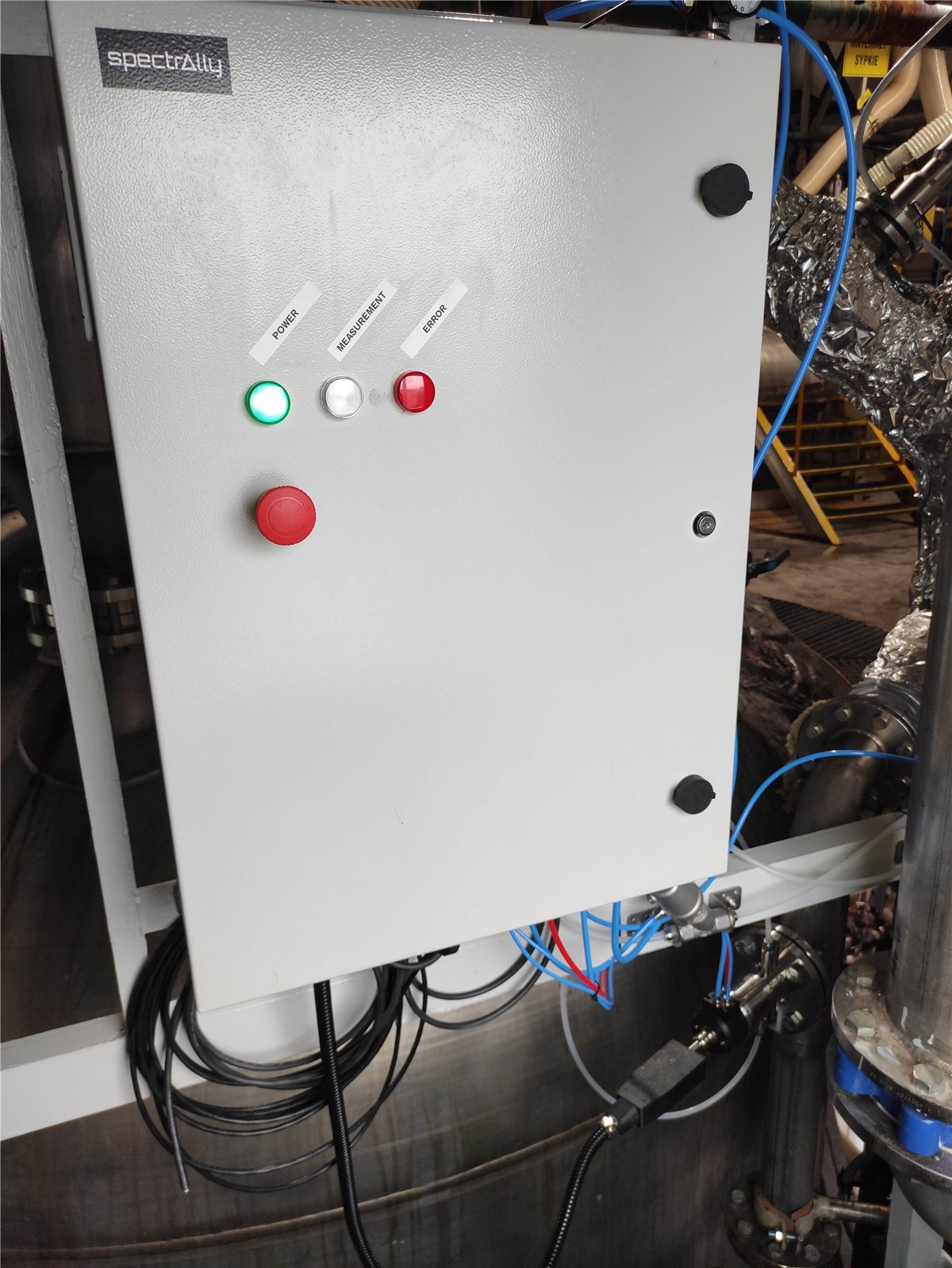
One plant, documented economics
A European PF producer closed its polycondensation control loop this way: payback in roughly 6.5 months, about 180,000 EUR saved per year. One plant in the resin segment - a documented case, not a general promise.
What comes off the PF critical path
Urea resins: F/U drift is the whole game.
UF is the dominant binder for MDF and particleboard - over 80% of the wood-resin market. The F/U molar ratio moves during the reaction and differs between batches, and it sets the reactivity and cure behavior your customer sees downstream.
The titration comes back after the reaction has moved on.
The routine today: an operator draws a sample every 10-20 minutes, and the sulfite titration result lands 30-45 minutes later. Off-spec batches mean downtime or disposal of the charge. Inline Raman replaces the loop with a value in seconds:
- F/U molar ratio and free formaldehyde, updated in seconds
- Degree of urea conversion through the production batch
- Viscosity inferred from the Raman spectrum - an indirect endpoint read
The operator sees when the reaction reaches its optimum and stops it there - no over-condensation loss, no conservative time margin. The same data set documents free formaldehyde per batch, the record CARB ATCM 93120 and EN 717-1 emission classes ask for.
Melamine resins: dosing errors priced in real time.
MUF and MF systems for HPL laminates, furniture and flooring surfaces. Melamine added to the UF base buys water and temperature resistance - at several times the price of urea.
The margin is set while the reactor runs.
A melamine dosing error of ±5% moves the batch margin and the emission class of the laminate it ends up in. Offline melamine HPLC takes 60-90 minutes with sample preparation, so the producer learns about a dosing error after the reactor is done. Inline, the composition is visible while dosing can still be corrected:
- F/M/U molar ratio - melamine dosing controlled during the reaction, not after
- Free formaldehyde without the titration loop
- Degree of urea conversion and spectrum-inferred viscosity
- Cloud point / water tolerance as endpoint indicators
Per-batch composition records also carry the documentation CARB ATCM 93120 and EN 717-1 / EN 438-2 emission classes expect for HPL exports.
What comes off the MUF / MF critical path
The feedstocks: verified in minutes, not trusted on paper.
Formalin is 37-50% HCHO in water with a methanol stabilizer, made by oxidizing methanol over a silver or iron-molybdenum catalyst. UFC concentrates it further into a urea-formaldehyde pre-solution at about 85% solids, F/U around 4.7. Both feed every resin reactor downstream - and both are usually accepted on a certificate of analysis.
Producer side: the product stream, read inline.
The standard control is sulfite titration at 30-45 minutes per sample - a typical formalin unit has no fast inline HCHO measurement on the finished product. An off-spec batch, with the wrong paraformaldehyde level or too much formic acid, reaches the customer and disturbs their resin cook. Spectrally reads the stream where it flows:
- HCHO concentration inline - in production, the filling line or storage
- Methanol and paraformaldehyde in the same read
- Composition verified at every transfer in 1-2 minutes instead of a 45-minute titration
Buyer side: every delivery checked before it hits the reactor.
UFC composition varies batch to batch and supplier to supplier - ±5-10% on F/U. Without a fast check, the buyer either trusts the supplier's CoA or waits 30-45 minutes for an own titration while the charge is already in the reactor. Measured at receiving, the numbers drive the recipe:
- F/U and HCHO concentration in 1-2 minutes, at-line or inline
- Automatic correction of urea charges and dilution for each UFC batch
- No manual sampling of concentrated formaldehyde streams
What comes off the upstream critical path
Different chemistries. The same instrument, the same workflow.
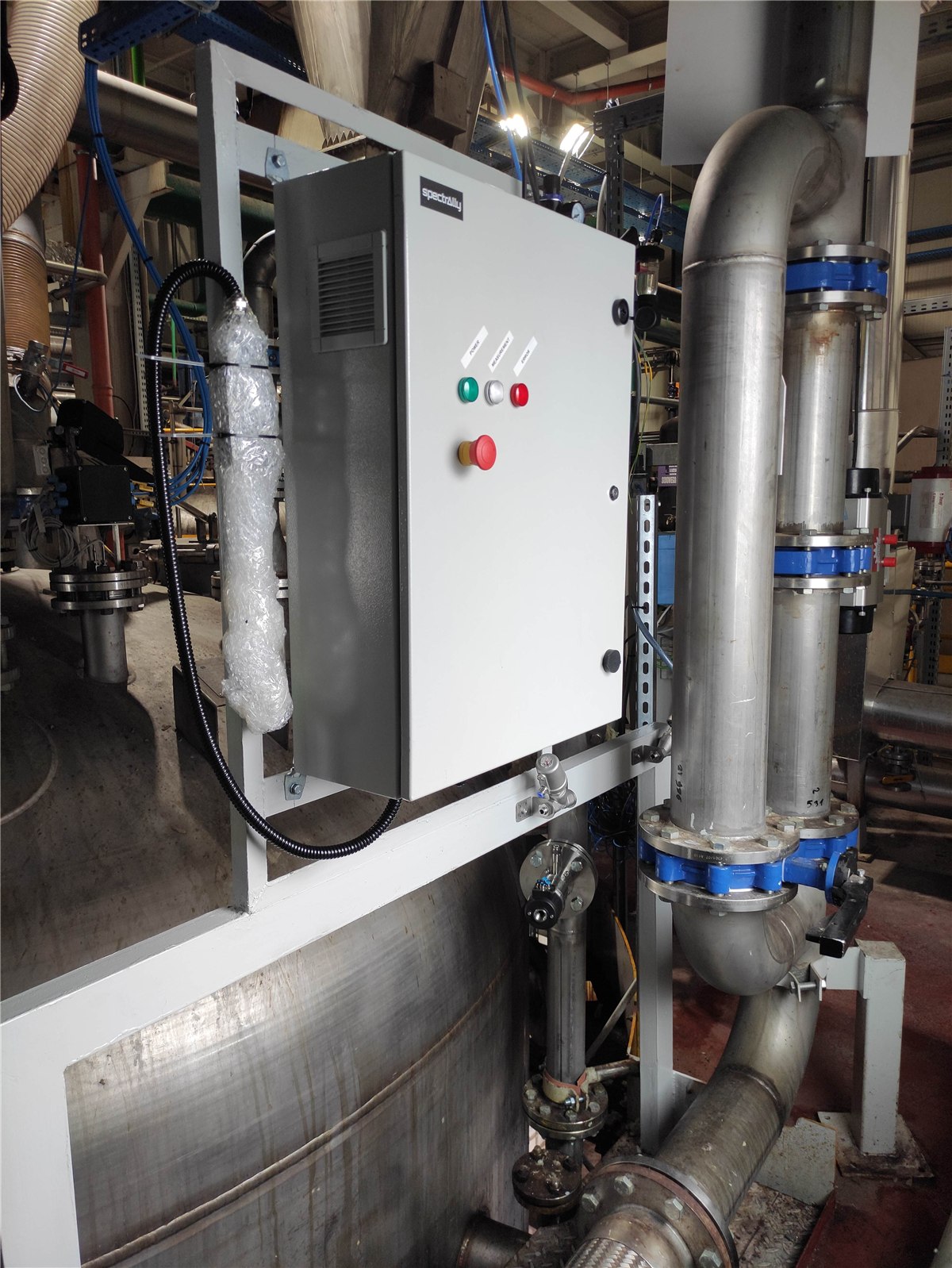
Every stream above is measured by the same platform: a Spectrally X1 PROBE in the vessel or line, the Spectrally X1 INLINE analyzer up to 100 m away by fiber, and Spectrally OS turning spectra into process values. What changes per chemistry is the chemometric model - built and validated on your matrix during the feasibility study.
One probe family across streams
316L immersion probe, IP67, -40 to +125 °C, up to 16 bar, pH 2-10 continuous (ATEX / IECEx Zone 0 versions planned for June 2027). The self-cleaning module retracts and rinses the optics between readings, so fouling PF and UF media stay readable.
A dedicated model per matrix
CNN, PLS and PCA models in Spectrally OS, trained on your recipes against laboratory reference values. Calibration maintains itself from a reference integrated in the probe - no manual recalibration routine.
Values, not spectra, in the control room
Concentrations and ratios arrive over Modbus as ordinary process tags. Every measurement is stored and exportable - CSV, PDF or raw spectra - as a per-batch record.
PF, UF, MUF/MF and UFC / formalin - one measurement layer.
UF holds more than 80% of the wood-resin market - the largest stream covered.
A single Raman acquisition takes from 5 seconds.
Melamine HPLC at the top of its range - off the critical path.
Start with your own chemistry.
Send representative samples from your PF, UF, MUF/MF, UFC or formalin process. We build and validate a chemometric model on your matrix in the Gekko lab and report exactly what inline Raman would read on your line - before any hardware decision.