Two grades built on one oxyanion.
ATS=™ and Thio 25-17™ differ in the cation and share the thiosulfate that sets the sulfur figure on both labels. This page follows where those figures are set and what a Raman spectrum reads in them.
Each figure on the label has a source in the liquor.
12% nitrogen and 26% sulfur, carried by (NH₄)₂S₂O₃. The sulfur figure follows the thiosulfate content; the nitrogen figure is set by the ammonium balance of the same salt.
25% soluble K₂O and 17% sulfur, chloride-free. Hydrite gives 12.2 lb/gal and SG 1.46 for the clear, colorless liquid.

The grade is set twice, in the line and in the tank.
Reaction outlet
SO₂ is absorbed and converted to thiosulfate. The concentration leaving this step decides how much correction the tank will need.
Storage tank
Liquor from several runs meets in the tank, and mixing decides whether a load drawn at the outlet matches the tank average.
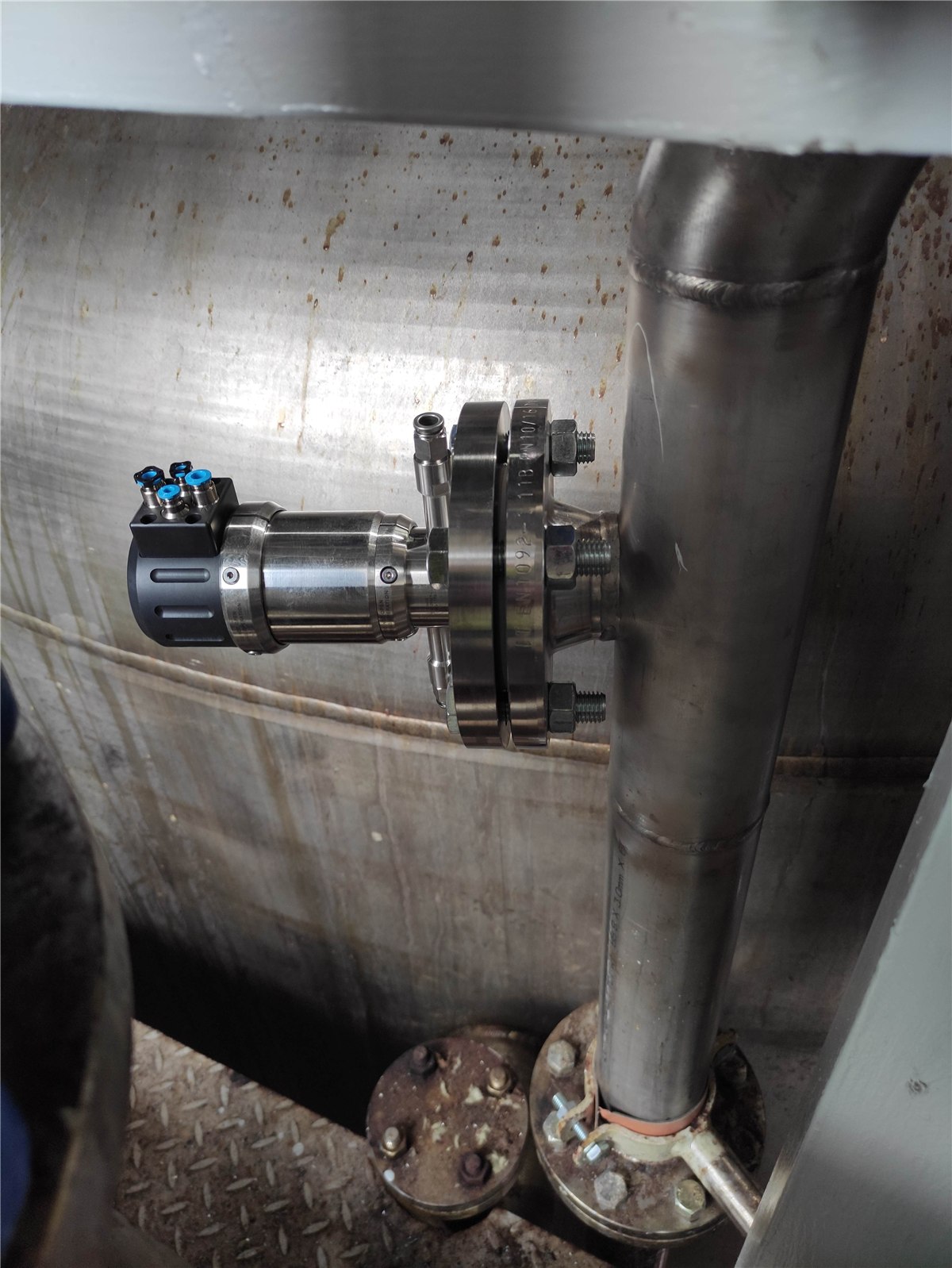
A clear aqueous liquor gives a clean spectrum.
Oxyanions with their own bands
Thiosulfate and sulfate are Raman-active. Sulfate's band at 976 cm⁻¹ sits close to the thiosulfate bands, and the feasibility study sets how finely the model separates them.
Water stays quiet
Water is a weak Raman scatterer. In an aqueous liquor it leaves the analyte bands readable, where infrared methods contend with strong water absorption.
One model per value
Spectrally OS runs one calibrated model per parameter, a hybrid of neural networks and classical chemometrics trained on your liquor and checked against your titration.
The same decisions, taken on a reading from the line.

Hope you find it interesting. Please contact us and talk about our analysis in detail.
a.lukasiewicz@gekkophotonics.com+1 804 593 0282