
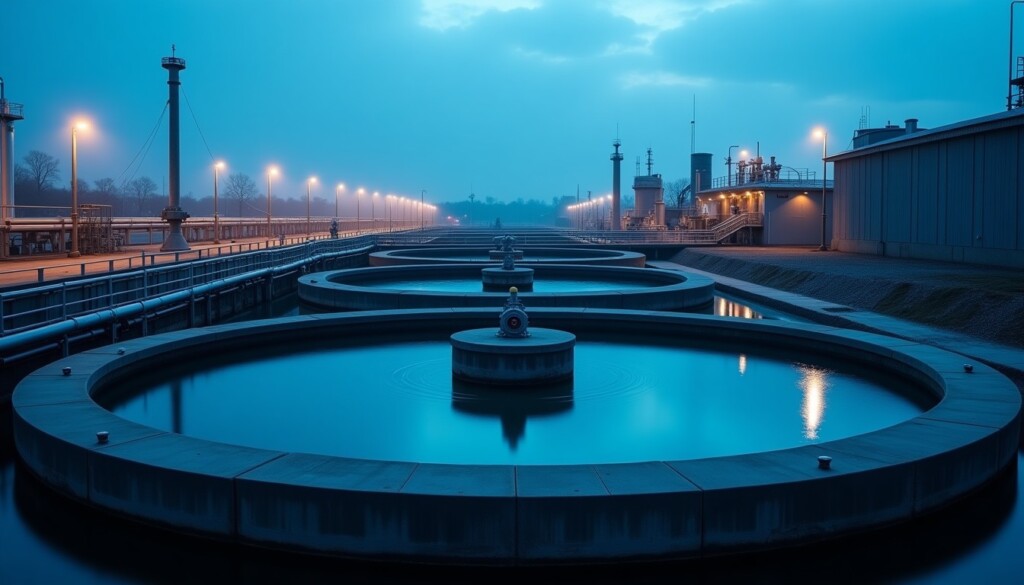
The water and wastewater sector in the European Union is entering a regulatory cycle that, over the next two decades, will change how industrial plants account for the quality of their streams. The new Urban Wastewater Treatment Directive (UWWTD recast, 2024/3019) and the concurrently adopted revision of the Industrial Emissions Directive (IED 2.0, 2024/1785) jointly tighten the screws: they introduce mandatory quaternary treatment in large municipal plants, tighten limits, and require significantly broader, continuous emission reporting. For chemical, petrochemical, cosmetic, and fertilizer plants, plants whose wastewater goes either directly to a receiving water body or to a municipal treatment plant, this means one thing: online monitoring with documented reliability ceases to be an option..
At Gekko Photonics, we design and manufacture process Raman analyzers in Poland — in inline, laboratory, and portable variants. We configure them for wastewater stream monitoring in the chemical and fertilizer industries: condensate quality, nitrate and phosphate control in digestate waters, and verification of stream composition before discharge to combined sewers. In this article, we frame together what the new EU regulations actually change and show where Raman spectroscopy makes sense as a reference or supporting technique for standard analytical methods.
What the new EU regulations actually change
The revision of the UWWTD entered into force on January 1, 2025. Member States are required to transpose it into national law by July 31, 2027 — from that date, the new requirements apply. Three elements relevant to industry:
- Quaternary treatment for micropollutants (pharmaceutical residues, ingredients cosmetics,). The requirement applies to municipal treatment plants serving ≥150,000 population equivalent (PE). Timeline: 20% of such plants by the end of 2033, 60% by the end of 2039, 100% by the end of 2045.
- Extended Producer Responsibility (EPR) places at least 80% of the costs of constructing and operating quaternary treatment on the pharmaceutical and cosmetic sectors. Member States are required to introduce an EPR mechanism by December 31, 2028.
- Risk area map — by December 31, 2030, each Member State must inventory locations where the concentration or accumulation of micropollutants from municipal wastewater threatens the environment or health.
The second, parallel wave is IED 2.0. It entered into force on August 4, 2024, with national transposition by July 1, 2026. Most important for operators:
- Mandatory Environmental Management System (EMS) — existing installations covered by IED before July 1, 2026, must implement an EMS and provide evidence of compliance by July 1, 2030.
- Tightened emission limit values and strengthened requirements for applying Best Available Techniques (BAT).
- Digitalization of permits and public availability of monitoring data — the operator must make key results available online.
In practice, this means that the wastewater stream of every large chemical, cosmetic, fertilizer, or food installation will, within 24–36 months, have a denser set of mandatory measurements and greater visibility of results to regulatory authorities.
What needs to be measured in a typical wastewater stream
The list of parameters monitored in industrial wastewater is long and depends on the plant profile. The most common parameters for which it is worth considering spectroscopic analytics alongside classical reference methods:
- Nitrates (NO₃⁻) and nitrites (NO₂⁻) — the symmetric stretching bands at ~1050 cm⁻¹ (nitrates) and ~1330 cm⁻¹ (nitrites) are classic Raman signatures in the aqueous phase.
- Phosphates — the symmetric stretching band around 937 cm⁻¹ for the free PO₄³⁻ ion (shifts depending on protonation: HPO₄²⁻, H₂PO₄⁻).
- Sulfates (SO₄²⁻) — a strong, well-separated band around 980–992 cm⁻¹ in the aqueous phase.
- Urea and biuret in digestate waters from fertilizer plants.
- Hydrocarbons and oil fractions in wastewater from refineries and petrochemical plants.
- Total Organic Carbon (TOC), Volatile Fatty Acids (VFA), ammonia — parameters also monitored in the literature using Raman methods, most often in combination with chemometric models.
Pharmaceutical and cosmetic micropollutants covered by the quaternary treatment of the UWWTD typically occur at concentrations of ng/L–µg/L. Classical Raman spectroscopy is not the primary tool here (detection limits are higher) — in this area, liquid chromatography with mass spectrometry and advanced techniques such as SERS (Surface-Enhanced Raman Scattering), on which many academic and industrial groups are working, play the role. Classical Raman, however, perfectly handles the earlier stages: control of process streams before discharge, where concentrations are still in the ppm range and process control prevents contamination of the receiving water.
Why Raman spectroscopy makes sense in wastewater
Three features of the Raman technique give it a practical advantage in specific applications for industrial water and wastewater monitoring:
- Water is a weak Raman scatterer. Unlike near-infrared spectroscopy, water does not dominate the spectrum — this allows measuring concentrations of ions and dissolved compounds in an aqueous matrix without extraction, drying, or dilution.
- Chemical signatures are specific. Raman bands are a „fingerprint” of the molecular structure — in typical inorganic wastewater (nitrates, phosphates, sulfates), the spectrum gives clear, well-separated peaks.
- The measurement is reagent-free and continuous. An immersion probe operates in the stream 24/7, without sampling, cuvettes, or sample transport. This eliminates analytical delays and laboratory costs.
Limitations must be known. In matrices with a high content of organic substances, Raman can be overwhelmed by fluorescence — we describe this in detail in the article on five methods of fluorescence suppression in process Raman. For highly colored streams (e.g., tannery wastewater, some paper fractions), a longer excitation wavelength is typically selected — we have dedicated a separate wavelength selection guide. to the issue of choosing 785 nm vs 1064 nm. Detection limits of classical Raman are typically tens to hundreds of ppm, depending on the analyte and matrix — therefore, it is a technique for process streams, not for final treated discharge wastewater.
Gekko Photonics solutions for water and wastewater
In our offering, water and wastewater monitoring is based on three variants of the Spectrally X1 platform and a common chemometric layer Spectrally OS. We work in a project mode: after feasibility on real customer samples, we select the probe configuration, excitation wavelength, and chemometric model.
- Spectrally X1 INLINE — process analyzer with an immersion probe in a pipeline or discharge tank. It operates with a 785 nm laser and 600 mW power (30 mW in ATEX version), communicates via PROFIBUS, PROFINET, or GSM, with a fiber optic cable up to 100 m between the electronics and the probe. The standard configuration supports up to 2 measurement channels — one analyzer can simultaneously monitor two points on the wastewater line.
- Spectrally X1 LAB — laboratory analyzer with a carousel for up to 25 samples, for validating chemometric models and verifying inline results on samples taken from the process. Measurement through-package via transparent packaging, acquisition time 5–300 s.
- Spectrally X1 PORTABLE — portable analyzer in a suitcase, useful in the pilot phase and for auditing distributed streams within a plant (various discharge points, preventive identification before investment in inline).
- Spectrally OS — software layer running on Debian GNU/Linux 13.2, PLS, PCA, and CNN models, a library of approximately 28,000 reference spectra, CSV/PDF/RAW export, RBAC access control, and audit trail — important in the context of IED 2.0 reporting requirements.
Based on our experience in related industries — from controlling urea, biuret, UAN, and AdBlue with a single analyzer to monitoring streams in specialty chemicals — the typical timeline from feasibility study to a functioning inline system ranges from 3 to 5.5 months, and the return on investment in industrial conditions is typically recorded within 6 to 10 months. All these figures pertain to implementations in chemically challenging streams, but wastewater streams — generally less demanding in terms of temperature and pressure — often proceed faster.
Integration with existing DCS/SCADA systems
For IED 2.0 operators, the requirement for public availability of monitoring results practically mandates that the wastewater analyzer not operate as an island. Values must be transmitted to DCS/MES/SCADA, to the regulatory reporting layer, and — in many plants — to a publicly accessible dashboard. The standard configuration of the Spectrally X1 INLINE utilizes PROFIBUS and PROFINET; the chemometric layer of Spectrally OS provides models and exports. Details of topology and typical integration patterns are described in the analyzer integration guide for DCS/MES/SCADA and in the analyzer catalog.
Frequently asked questions
Will Raman replace classical physicochemical measurements in wastewater?
It will not replace, but complement them. Classical reference measurements (chromatography, photometry, electrochemistry) will remain the foundation of regulatory reporting for many parameters. Raman enters as a tool for real-time online measurement — enabling rapid response to process anomalies before the final parameter exceeds permissible concentrations.
Does the new fourth treatment stage of the UWWTD require Raman monitoring?
The directive itself does not specify a particular measurement technique for the fourth stage — it imposes the goal of removing micropollutants and indicates technologies such as ozonation and activated carbon adsorption as directional. Measuring micropollutants at concentrations of ng/L–µg/L requires techniques with lower detection limits than classical Raman. Raman, however, is a natural candidate for monitoring the technological feed streams to the treatment plant — i.e., pre-treatment control at the production facility.
Do you have Raman implementations in water and wastewater plants?
Most of our implementations are in process chemistry — phenolic and urea formaldehyde resins, cosmetics, fertilizers, adhesives, hydrocarbons. In the area of industrial wastewater, we approach on a project basis: we verify on client samples during a feasibility cycle whether Raman is the appropriate method for a given analyte and matrix, before the client commits CAPEX. The fertilizer and petrochemical streams in which we work at the process level share many characteristics with wastewater from the same plants — the chemometric knowledge is transferable.
What probes are used for wastewater?
Typically, immersion probes with a sapphire or quartz window, in a configuration resistant to fouling. For streams with high solids content or biological flocs, the Spectrally X1 INLINE can operate with the Retractex self-cleaning module — automatic probe retraction, optical window flushing, and return to the measurement position eliminates the typical problem of window fouling in challenging media.
Does the analyzer meet the audit and reporting requirements of IED 2.0?
Spectrally OS maintains an audit trail with role-based access control (RBAC), data export in CSV/PDF/RAW, and archiving of spectra along with model results. This provides the technical foundation for the requirement of continuous data availability and reporting transparency introduced by IED 2.0. The specific compliance of audit procedures at the plant is determined during the design phase with the environmental protection team.
Test measurement and engineering consultation
At Gekko Photonics, we start with samples. If you have a wastewater stream for which you are considering online monitoring — send us a sample. We perform a test measurement and a feasibility report, typically within 10 business days of receiving the sample: we verify whether Raman can detect the analyte, what wavelength and probe configuration makes sense, and what order of magnitude of detection limit is realistic for your matrix. Then we schedule a 30-minute conversation with an application engineer, meeting, in which we discuss the results and, if it makes sense, plan a pilot phase.
Inquiries are handled through our contact page. The water and wastewater industry in which we work has its own application description and typical configurations — it is worth reviewing before the discussion.