The endpoint you titrate too late.
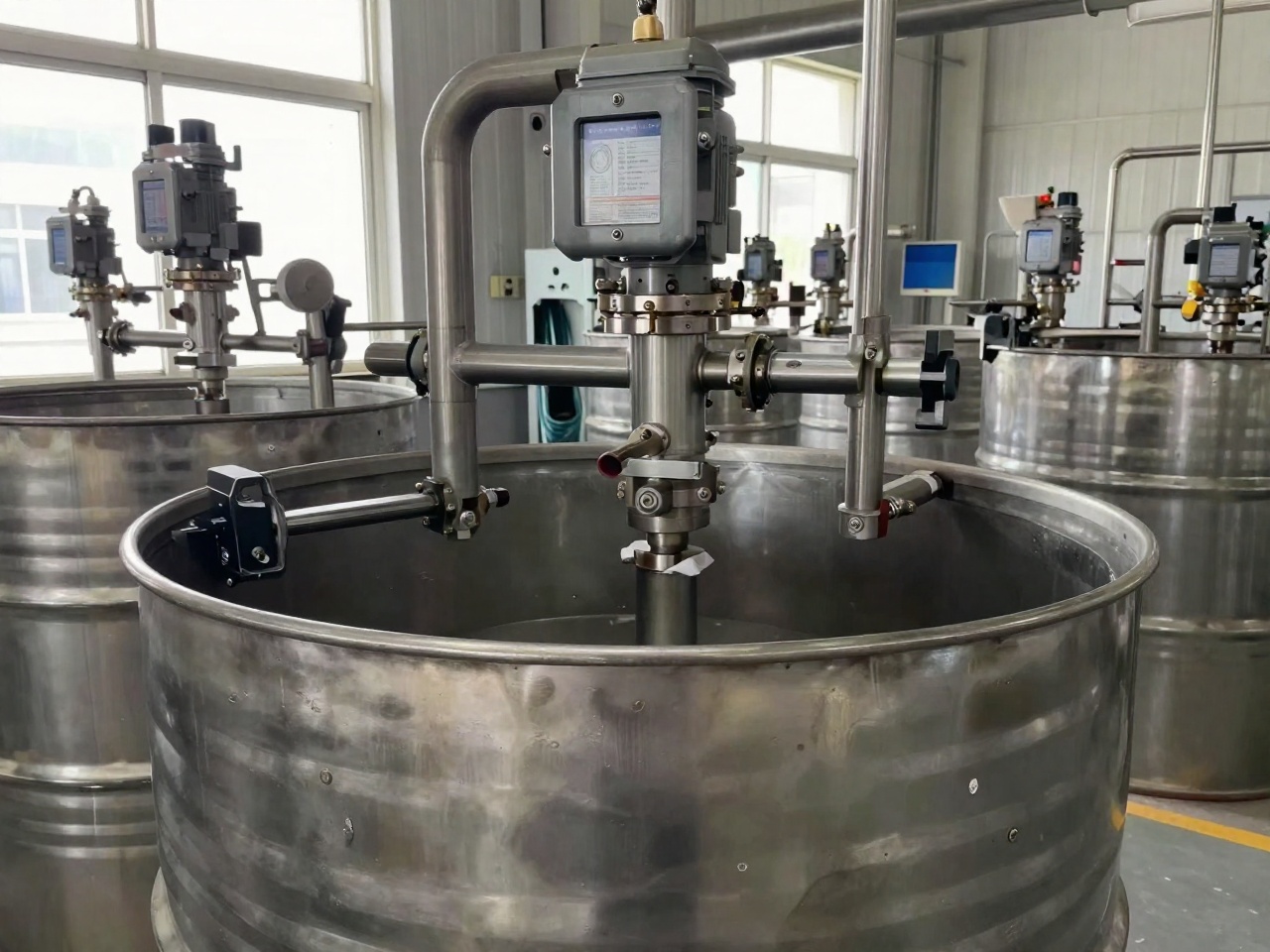
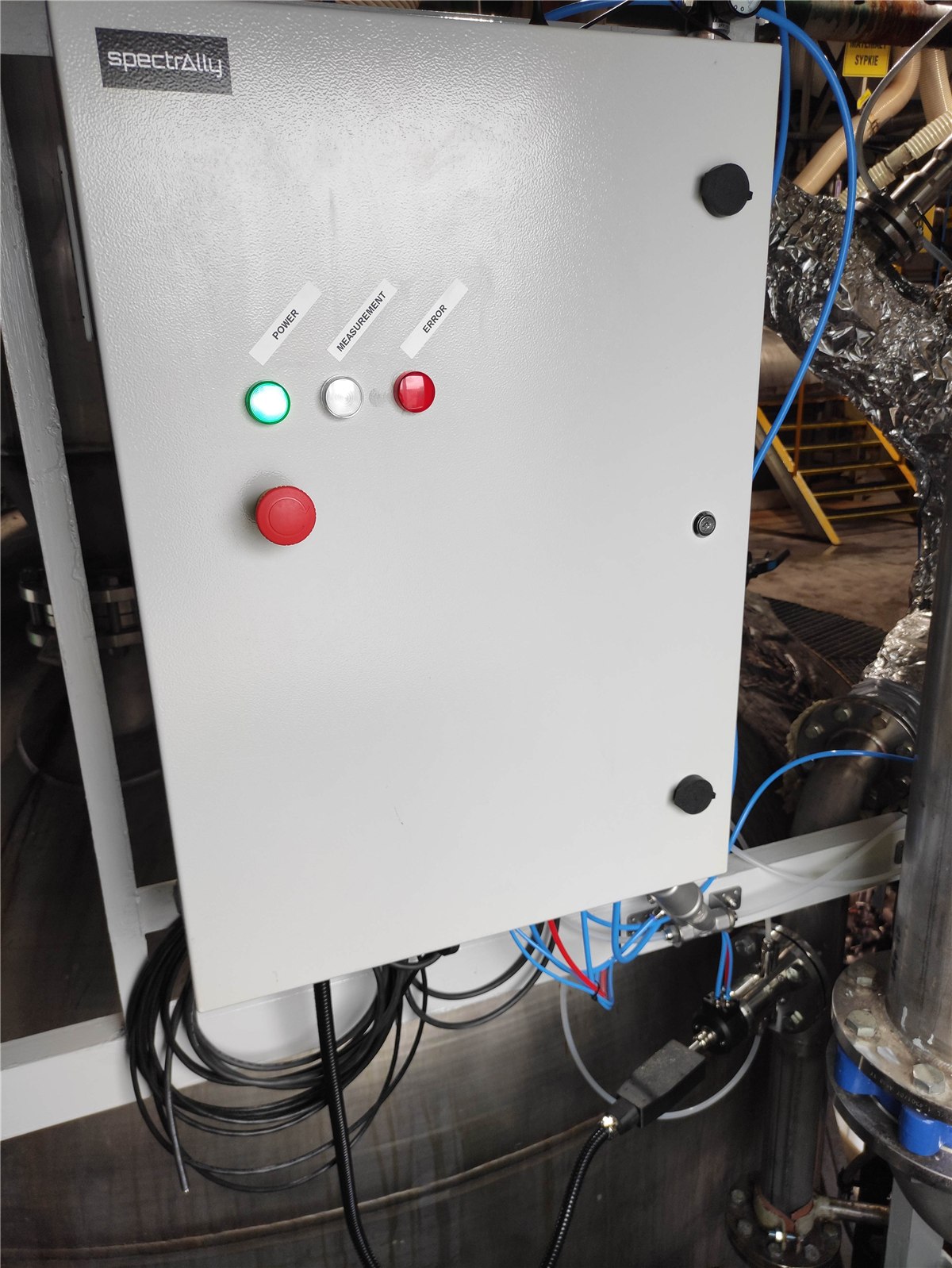
Spectrally™ keeps an immersion Raman probe in your epoxy, polyurethane-prepolymer and reactive-adhesive reactors 24/7, so no operator draws a manual TDI/MDI sample. It reads the reactive endpoint - epoxide equivalent weight, NCO% and the R index, residual monomer and cure state - inline, directly in the reactor rather than pulled to a lab, in seconds and with no sampling or reagents.
Epoxy resins, polyurethane prepolymers from TDI or MDI, and reactive hot-melts and adhesives where the cure state has to be confirmed in-process.
Epoxide equivalent weight for epoxy, NCO% and the R index for prepolymers - read live in the reactor instead of inferred after the batch.
The isocyanate NCO band near 2270 cm⁻¹ is strong and isolated - a near-ideal Raman target - so NCO% reads directly and continuously.
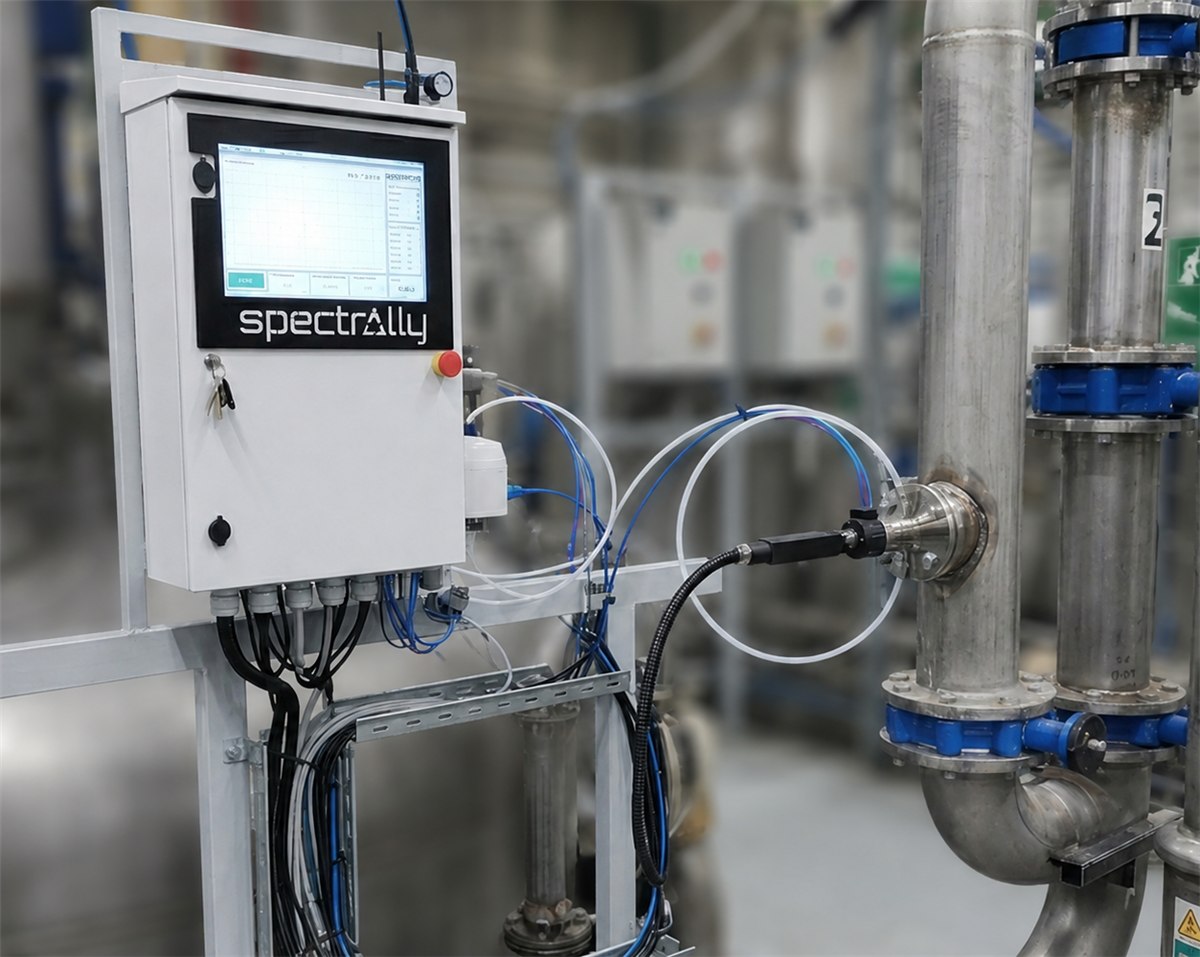
Immersion probe in the reactor, feeding your PLC / DCS continuously - it stays in the reactor, so no one draws a manual TDI/MDI sample.
Everything a reactive-resin plant asks us - one page per answer.
Six focused pages: the chemistries we cover, the parameters we read, how the measurement works, the proof behind it, the regulatory context and the instrument itself.
The reaction does not wait for the titration.
NCO% comes back from a di-n-butylamine titration 20 to 40 minutes later, and each of the 3 to 8 samples a plant draws per batch is a hand exposure to TDI or MDI. By then the prepolymer has moved on, and every sample carried a diisocyanate risk that did not need to exist.
Draw 3 to 8 NCO samples per batch, each an exposure to TDI or MDI, then run a 20 to 40 minute di-n-butylamine titration in the fume hood; residual monomer waits on a GC. Every sample needs a trained operator, and the number describes a reactor that has already moved on.
The immersion probe reads the NCO band near 2270 cm⁻¹ in the reactor continuously and streams NCO%, the R index and cure state to your control system. The endpoint is caught while you can still act - and no operator draws a manual diisocyanate sample, so NCO titration and GC become verification, not the bottleneck.
Spectrum to a process value, continuously.
Single-ppm composition sensitivity where the chemistry demands it.
One-time system cost in EUR, 75-250k by configuration.
From feasibility to a validated model on your line.
Put it on your reactor - starting with your own batch.
Send representative samples or process data from your epoxy, PU-prepolymer or reactive-adhesive reactor. We build and validate a chemometric model on your matrix and hand you the numbers inline Raman reads on your line - epoxide equivalent weight, NCO% and the R index, residual monomer and cure state - benchmarked against your NCO titration and GC reference methods, with the manual diisocyanate sample removed from the loop.