Every nitrogen and DEF number traces back to the concentration in the line.
ISO 22241 for DEF/AdBlue, Regulation (EU) 2019/1009 for CE fertilising products and the Nitrates Directive for effluent all resolve to the same handful of figures - urea concentration, total nitrogen, biuret, nitrate - fixed in the reactor and the blending line long before an offline method confirms them.
SCR compliance is set by the urea concentration you blend.
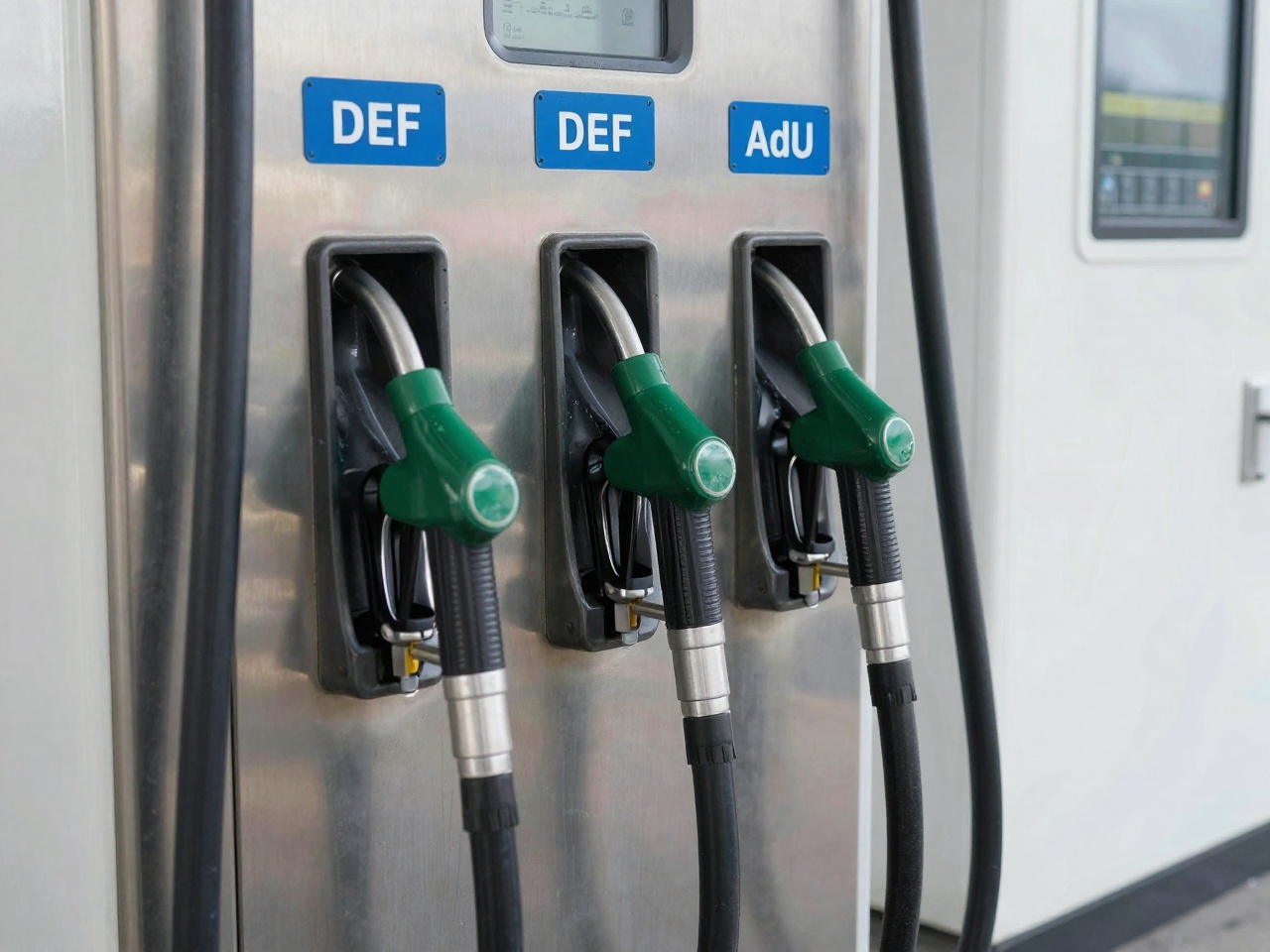
DEF/AdBlue is AUS 32 - a 32.5% urea solution in deionized water that feeds Euro VI SCR to cut NOx. ISO 22241 fixes the urea-concentration window (32.5% ±0.7%) and the contaminant limits, and AdBlue sits inside Euro VI homologation under Regulation 2017/2400. Off-spec fluid destroys the SCR catalyst, and the deviation lands on the producer.
What the rules cover
ISO 22241-1/2/3 sets urea concentration, biuret and the absence of contaminants - checked for every batch. AdBlue is part of Euro VI homologation under Regulation 2017/2400. Fluid without that documentation does not move into the covered market.
Who it touches
DEF and AdBlue producers and fillers selling into Euro VI markets. Urea concentration has to hold inside the ISO 22241 window per batch, and homogeneity has to hold across every tanker and IBC that leaves the site.
What continuous measurement adds
The in-plant standard for urea is refractometry - 2-3 minutes, total dissolved solids only, and it cannot separate urea from ammonium nitrate. An inline Raman probe, reading directly in the pipeline without drawing a sample, logs urea concentration and homogeneity continuously. Raman verifies that composition; the ISO 22241 trace metals (Ca, Fe, Cu, Zn, Al) stay with ICP - a boundary of the method, stated up front.
Declared nitrogen and the biuret limit both trace back to the reactor.
Regulation (EU) 2019/1009, in force since 16 July 2022, governs CE-marked fertilising products. It fixes what has to be documented: total nitrogen as the declared parameter that sets the product class, and biuret held below 1% by weight in fertilizer urea.
What it covers
Total nitrogen is legally declared and determines the product class. Biuret must stay below 1% wt in fertilizer urea (IFA and Reg 2019/1009) and below 0.5% in RSM - it inhibits plant growth from 0.5% and blocks the urease enzyme. The regulation applies to urea, UAN/RSM and ATS.
Who it touches
Producers of urea, UAN/RSM and ATS marketing CE-marked product. Enforcement runs through customer audit, Notified Body and buyer specification - so composition is documented batch by batch, not only at type approval.
What continuous measurement adds
Total-N certification runs on Kjeldahl at 60-90 minutes; biuret on GC at 40-60 minutes, HPLC at 20-30 minutes or DMAB titration at 15-20 minutes. Inline Raman reads total nitrogen through the nitrate band near 1050 cm⁻¹. Feasibility on fertilizer granules returned a very strong linear correlation, R = 0.91 on raw data, and biuret is trended during the cook so operators correct before off-spec.
Nitrogen is regulated on the way out of the plant, too.
Residual nitrogen from RSM and ATS operations falls under the Nitrates Directive 91/676/EEC, and integrated environmental permits translate it into N-total limits on effluent. Raman covers part of that picture directly - and is explicit about where it hands the rest to reference methods.
Nitrate limits on effluent
The Nitrates Directive sets nitrogen limits for effluent; site permits turn them into N-total ceilings. Nitrate is directly measurable in the line - an isolated band near 1044 cm⁻¹, with repeatability around SD 0.0004 a.u.
Ammonium needs a model
In the current optics the N-H bands near 3030-3335 cm⁻¹ are masked by the broad water O-H signal. Ammonium is reached through a chemometric model on the full spectrum, validated on ammonium-nitrate standards over 2.0-10.76% N-NH4+ with a mean prediction error around 0.069%.
HPLC and Kjeldahl stay the referee
Inline Raman is real-time process measurement, not a replacement for the certifying lab. Kjeldahl for total nitrogen and HPLC or IC for biuret remain the reference methods. The inline record removes the waiting, not the certification.
What the analyzer reads here
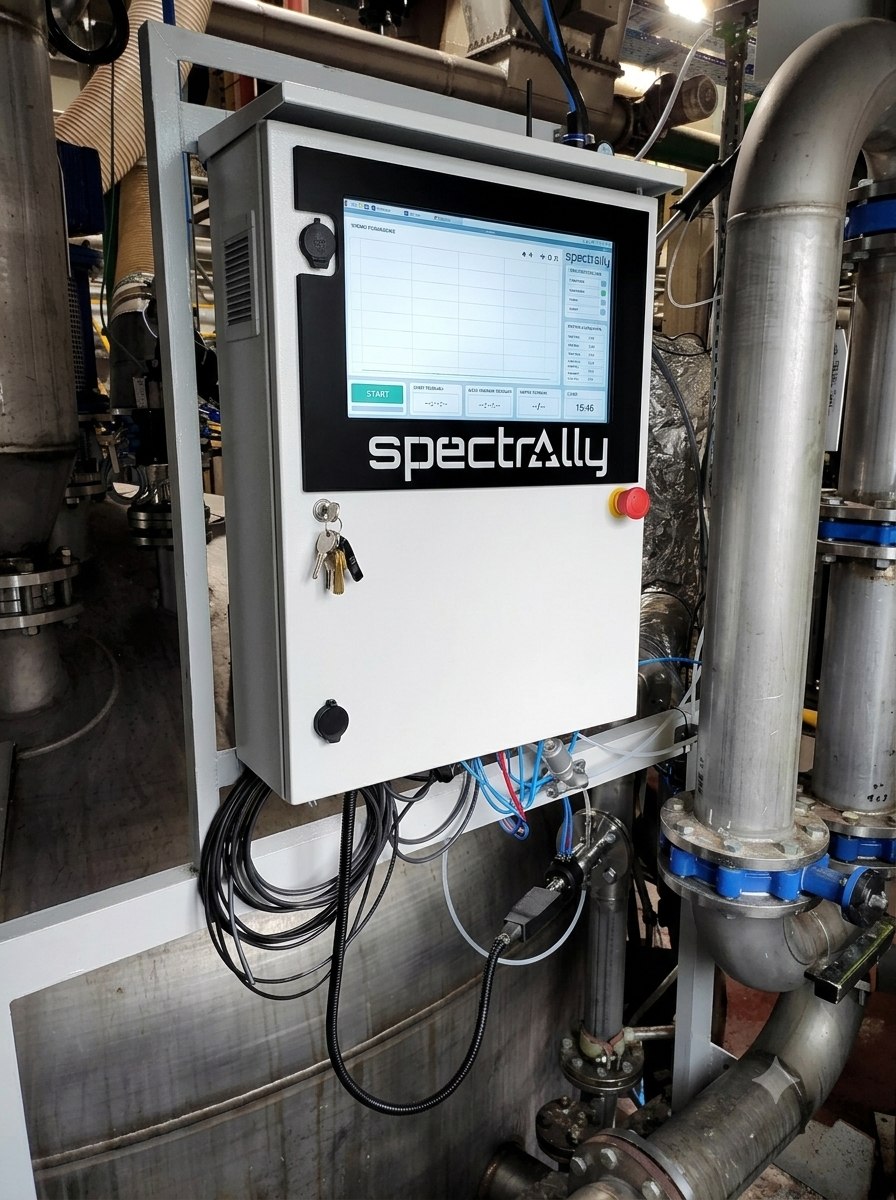
Spectrally X1 INLINE measures urea concentration, nitrate, biuret and solution homogeneity directly in the reactor, pipeline or mixer - during production and at dosing. No sample is drawn from the stream.
On effluent, nitrate is identified directly and read continuously. The study stream at an ammonium-nitrate producer ran strongly variable - pH 1-12, 20-60°C, low viscosity with occasional turbidity spikes - and roughly one minute was enough for both nitrogen readings.
The nitrogen chemistry proven on that effluent transfers directly to UAN/RSM composition. Ammonium down to ppm still needs an optics change and calibration on real effluent - stated here, not implied.
The tightest limits arrive with the purchase order.
Regulation sets the frame. The working numbers - urea concentration, biuret, declared %N, N/S ratio, homogeneity - come from buyers and the ISO windows. Holding them batch after batch, tanker after tanker, is where the measurement problem actually lives.
Urea concentration has to sit inside the ISO 22241 window; off-spec fluid destroys the SCR catalyst and becomes producer liability. Per-batch plus tanker and IBC homogeneity is the check that matters.
Urea and ammonium-nitrate concentrations must hit a narrow composition spec. Feedstock fluctuations propagate, and customers claim on any deviation from the declared %N.
Biuret inhibits growth from 0.5% and blocks the urease enzyme. CE-marked urea keeps it under 1% wt, RSM under 0.5% wt. Too high means disposal or a lower price.
For the neighboring thiosulfate family, concentration and the N/S ratio must hit spec; deviations bring complaints and CE problems.
The batch record, two ways
See the batch record your line would write.
Send representative samples from your urea, UAN/RSM, DEF/AdBlue or ATS process. We build and validate a chemometric model on your matrix and show the urea-concentration, nitrate and biuret trail an inline probe would log for every batch and every tanker - before any hardware decision.