Chemie-Abdeckung für die Familie der Schwefeldünger.
Die Thiosulfatdünger ATS, KTS und CaTS sowie Ammoniumsulfat haben eine gemeinsame Leitgröße – den Thiosulfat- bzw. Sulfatwert, der Strom für Strom die Spezifikation erfüllen muss. Spectrally X1 INLINE misst ihn inline – mit einer Sonde direkt im Prozessstrom, die in etwa 5 Sekunden an Ihr Leitsystem meldet – anstelle eines Titrations- oder Ionenchromatographie-Zyklus von 20-60 Minuten.
Eine Messebene für die gesamte Schwefeldünger-Familie.
Thiosulfat- und Sulfatdünger entstehen durch Absorption der Gase NH3, H2S und SO2 in einem kontinuierlichen wässrigen Strom. Die Zusammensetzung wird nach wie vor offline bestimmt: iodometrische Thiosulfat-Titration in 20-30 Minuten, Ionenchromatographie für das vollständige Anionenprofil in 30-60 Minuten, Dichtemessung als Ersatzgröße für die Konzentration ohne qualitative Aussage zur Zusammensetzung. Der Absorptionsprozess steht nie still, daher kommt ein Offline-Ergebnis erst, wenn der Strom bereits weitergeflossen ist. Spectrally X1 INLINE legt eine Raman-Messebene über die gesamte Familie – eine Sonde im Strom oder Tank, ein chemometrisches Modell je Matrix, Werte in Ihrem Leitsystem in Sekunden. Zur Inline-Messung in der Nische der Schwefeldünger gibt es nur wenige veröffentlichte Arbeiten, daher ist eine dokumentierte Raman-Messung am Strom eine glaubwürdige technische Position – als Tatsache formuliert, nicht als Behauptung.
Thiosulfatkonzentration und N/S-Verhältnis definieren das Produkt. Beide werden live am Strom gemessen, anstelle einer iodometrischen Titration von 20-30 min.
12% N + 26% S, hergestellt durch Absorption der Gase NH3, H2S und SO2. Schwefeldünger und Nitrifikationshemmer, eingesetzt als UAN/RSM-Zusatz oder eigenständig.
Verwandte flüssige Thiosulfatdünger auf Basis desselben Anions. Dieselbe Messung – Thiosulfatkonzentration und Homogenität der Lösung, inline.
Stickstoff und Schwefel als Ammoniumsulfat. Die Sulfatbande bei etwa 976 cm-1 wird direkt aus dem Spektrum abgelesen.
Ammoniumthiosulfat: Die Spezifikation ist der Thiosulfatwert.
ATS enthält 12% N + 26% S, wird durch Absorption der Gase NH3, H2S und SO2 in einem wässrigen Strom hergestellt und als Schwefeldünger und Nitrifikationshemmer eingesetzt – als UAN/RSM-Zusatz oder eigenständig auf schwefelarmen Böden. Thiosulfatkonzentration und N/S-Verhältnis müssen über den gesamten Produktionslauf in der Spezifikation bleiben; eine Abweichung zeigt sich später in Form von Kundenreklamationen und Problemen bei der CE-Zertifizierung.
Von einer Titration mit 20-30 Minuten zum Live-Wert aus dem Strom.
Der Absorptionsprozess arbeitet mit einem kontinuierlichen Strom, daher hinkt die Offline-Schleife immer hinterher: Die iodometrische Titration liefert Thiosulfat in 20-30 Minuten, die Ionenchromatographie löst das vollständige Anionenprofil in 30-60 Minuten auf, und die Dichtemessung liefert nur eine Ersatzgröße für die Konzentration ohne Aussage zur Zusammensetzung. Die Sonde misst die Lösung dort, wo sie fließt:
- Thiosulfatkonzentration, live am Strom statt per iodometrischer Titration in 20-30 min
- N/S-Verhältnis, kontinuierlich bestätigt statt einmal pro Schicht
- Homogenität der Lösung in Tank und Leitung, ohne Stichprobenahme
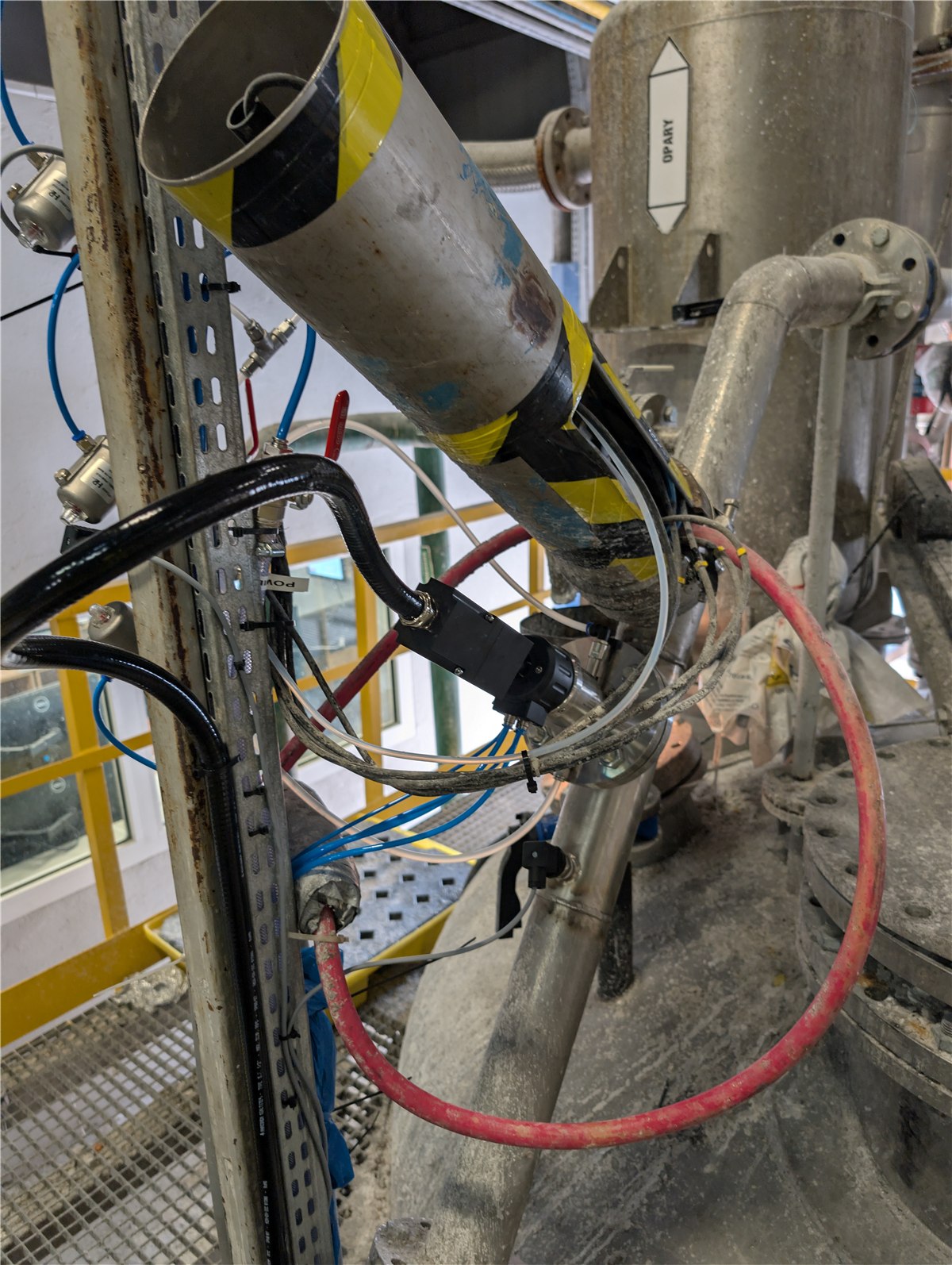
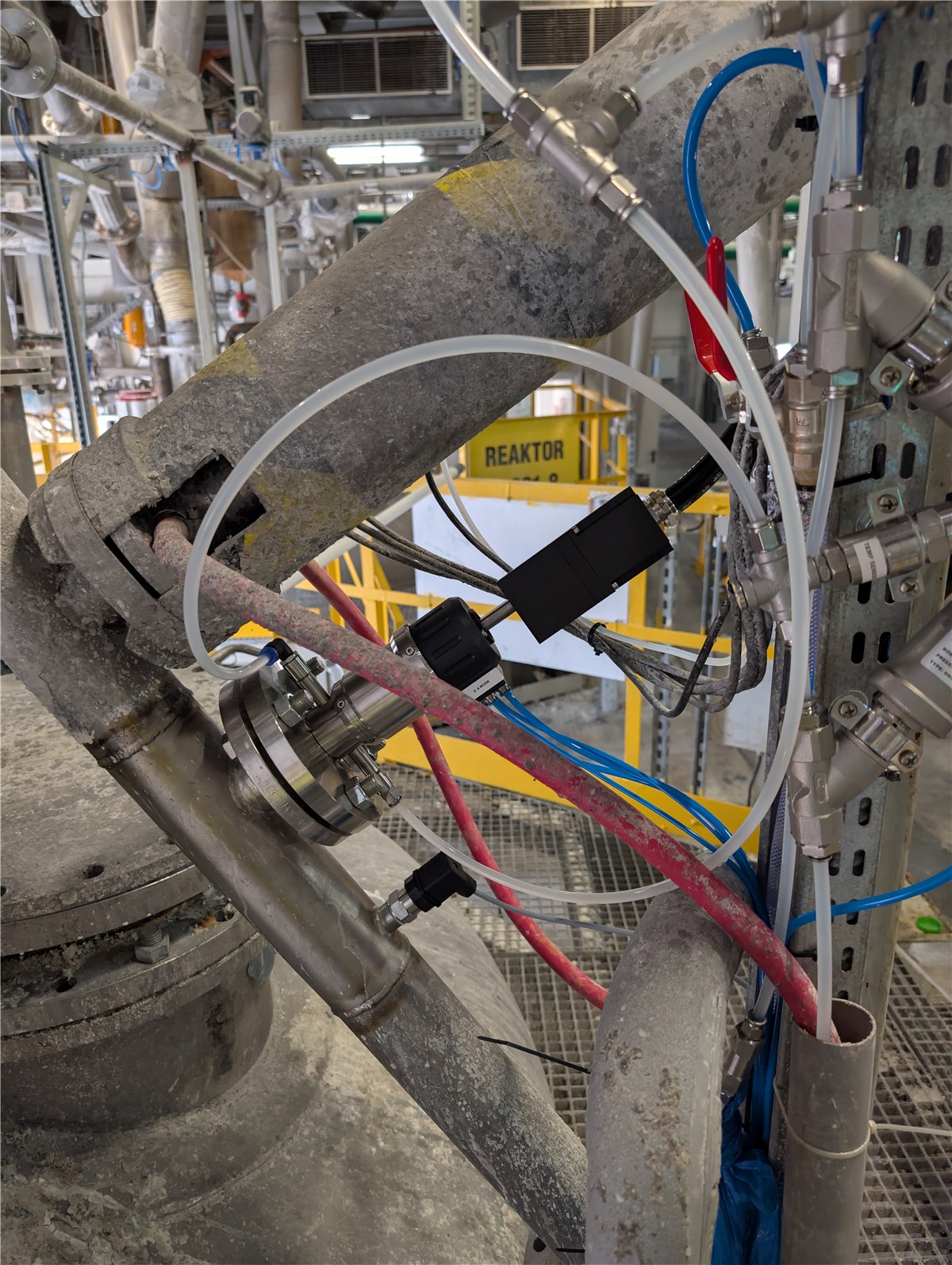
Thiosulfat S2O3^2- ist ein stark Raman-aktives Oxyanion, und Wasser ist ein schwacher Raman-Streuer, daher lässt sich der wässrige Strom mit Raman gut inline messen. ATS-Lösungen sind klare Ströme mit geringer Belagsbildung; die selbstreinigende, rückziehbare Sonde durchläuft den Zyklus Zurückziehen → Spülen → Wiedereinfahren, um das optische Fenster über lange Kampagnen frei zu halten.
Ein stark Raman-aktives Oxyanion
Das Thiosulfat-Ion S2O3^2- besitzt klar definierte Raman-Banden und wird direkt im wässrigen Strom gemessen, ohne Reagenzien und ohne Probenahme. Gekko stuft ATS als TIER S ein – eine einsatzbereite Konfiguration für die Thiosulfatmatrix.
Sulfatbande bei 976 cm-1
In einer Düngemittelstudie von Gekko (FS-001) wurde die symmetrische Streckschwingung des Sulfats direkt bei etwa 976 cm-1 gemessen; im Spülwasser (FS-003) dient Sulfat als Indikator für die Sauberkeit, und Nitrat ist nachweisbar. Die Sulfatkomponente des Produkts bietet einen direkten optischen Ansatzpunkt.
Ein Werk, dokumentierte Wirtschaftlichkeit (Harze)
Ein europäischer Hersteller von PF-Harzen setzte eine selbstreinigende Reaktorsonde zur Inline-Messung von Phenol und Formaldehyd ein: Amortisation in rund 6,5 Monaten, etwa 180.000 EUR Einsparung pro Jahr, -10% Rohstoffverluste, -12% Produktionsabfall und unter 1,5% Schwankung von Charge zu Charge. Diese Zahlen stammen aus dem Harzsegment; Ihre ATS-Machbarkeitsstudie ermittelt die entsprechenden Werte an Ihrem eigenen Strom.
Was aus dem kritischen Pfad der ATS-Produktion entfällt
Kalium- und Calciumthiosulfat: dieselbe Messung, ein anderes Kation.
KTS und CaTS sind flüssige Thiosulfatdünger auf Basis desselben Anions wie ATS. Der Messansatz ist identisch – Thiosulfatkonzentration und Homogenität der Lösung werden inline gemessen, im Vergleich zu denselben 20-30 min iodometrischer Titration und 30-60 min Ionenchromatographie. Nur das chemometrische Modell ändert sich und wird auf der KTS- bzw. CaTS-Matrix neu trainiert.
Eine Sonde für die gesamte Thiosulfat-Familie.
Das Thiosulfat-Oxyanion trägt das Signal unabhängig vom Kation, daher decken dieselbe Plattform und derselbe Workflow die Kalium- und Calciumqualitäten ab. Die Sonde misst direkt in der Mischlinie oder im Lagertank:
- Thiosulfatkonzentration, live in der Mischlinie oder im Tank
- Homogenität der Lösung über die gesamte Charge, ohne Stichprobenahme
- Verhältnis von Nährstoff zu Schwefel, kontinuierlich während der Herstellung bestätigt
Die selbstreinigende, rückziehbare Sonde bietet denselben Vorteil klarer Lösungen wie beim ATS-Strom, und das Modell wird während der Machbarkeitsstudie auf Ihrer KTS- bzw. CaTS-Matrix validiert.
Ammoniumsulfat: Die Sulfatbande wird direkt ausgelesen.
AMS führt Stickstoff und Schwefel als Ammoniumsulfat. Das Sulfat-Oxyanion SO4^2- ist ein starker Raman-Streuer mit einer klar definierten symmetrischen Streckschwingungsbande bei etwa 976 cm⁻¹, die in einer Gekko-Düngemittelstudie (FS-001) direkt gemessen wurde. Somit werden Sulfatkonzentration und Lösungsreinheit inline ohne Titration oder Ionenchromatographie erfasst.
Sulfat bei 976 cm⁻¹, direkt aus dem Spektrum.
Die symmetrische Streckschwingungsbande bietet eine direkte, spezifische Messgröße für die Sulfatseite des Produkts – anstelle einer 30–60-minütigen Ionenchromatographie-Schleife oder eines densitometrischen Näherungswerts:
- Sulfatkonzentration (SO4^2-) aus der symmetrischen Streckschwingungsbande bei 976 cm⁻¹
- Lösungshomogenität und Stromklarheit, live
- Trendabweichungen werden prozessbegleitend erkannt, bevor sie zu Kundenbeschwerden führen
Gleiche Plattform, gleicher Workflow wie bei den Thiosulfat-Strömen – das Modell wird während der Machbarkeitsstudie auf der AMS-Matrix neu trainiert und gegen Ihre Referenzmethode validiert.
Was von der AMS-Kritikalität entfällt
Drei Chemien. Dasselbe Instrument, derselbe Workflow.
Jeder oben genannte Strom wird mit derselben Plattform gemessen: eine Spectrally X1 PROBE im Strom oder Tank, der Spectrally X1 INLINE-Analysator bis zu 100 m entfernt per Faser und Spectrally OS, das Spektren in Prozesswerte umwandelt. Was sich je nach Chemie ändert, ist das chemometrische Modell – aufgebaut und validiert auf Ihrer Matrix während der Machbarkeitsstudie.
Eine Sondenfamilie für alle Ströme
316L-Eintauchsonde, IP67, ATEX/IECEx-Zone-0-Konfiguration für Juni 2027 geplant, -40 bis +125 °C, bis 16 bar, pH 2–10 kontinuierlich. Das selbstreinigende, ausfahrbare Modul durchläuft Zyklen aus Ausfahren, Spülen und Rückkehr, um die Optik klar zu halten; ATS-, KTS- und AMS-Lösungen sind klare, wenig verschmutzende wässrige Ströme.
Ein dediziertes Modell pro Matrix
KI und fortschrittliche Chemometrie mit CNN-Kern in Spectrally OS, trainiert auf Ihren Thiosulfat- oder Sulfat-Rezepturen gegen Laborreferenzwerte – iodometrische Titration und Ionenchromatographie – und genauer sowie schneller als herkömmliches PLS/PCA. Die Auto-Kalibrierreferenz ist in die Sonde integriert; Modelle aktualisieren sich ohne Anlagenstillstand.
Werte, keine Spektren, im Kontrollraum
Konzentrationen und Verhältnisse werden über Modbus als Prozess-Tags an PLC/DCS und MES/SCADA/LIMS übermittelt. Jede Messung wird gespeichert und exportierbar – CSV, PDF oder Rohspektren – als chargenbezogener, zeitgestempelter Zusammensetzungsdatensatz, der ein CE-Dossier gemäß (EU) 2019/1009 stärkt.
ATS, KTS/CaTS und AMS auf einer gemeinsamen Messebene.
Eine einzelne Raman-Erfassung dauert ab 5 Sekunden.
Iodometrische Thiosulfat-Titration, von der Kritikalität genommen.
Ionenchromatographie mit vollständiger Anionenanalyse am oberen Ende ihres Bereichs.
Beginnen Sie mit Ihrem eigenen Thiosulfat-Strom.
Senden Sie repräsentative Proben aus Ihrem ATS-, KTS-, CaTS- oder AMS-Prozess. Wir erstellen und validieren ein chemometrisches Modell auf Ihrer Matrix im Gekko-Labor, benchmarken es gegen Ihre iodometrische Titration oder Ionenchromatographie und berichten exakt, was Inline-Raman an Ihrem Strom misst. Ihre Machbarkeitsstudie legt die Zahlen auf den Tisch, bevor eine Hardware-Entscheidung getroffen wird.