The properties that define a silicone - read in the reactor.
Chain length, silanol and vinyl content, residual cyclics and cure state are what separate one silicone grade from the next. Spectrally reads them inline - inside the reactor or line, continuously, without pulling a sample - from the diagnostic Raman bands of the siloxane backbone, Si-H and vinyl C=C.
One spectrum in. Six process values out.
Across PDMS, addition-cure LSR/HCR, chlorosilane and medical-grade silicone processes, the batch decision reduces to a handful of composition and cure values - and most of them still come back from the lab after the reaction has moved on. All six live in the Raman spectrum of the reaction mixture. Each is extracted by its own chemometric model, calibrated against your laboratory's reference values during feasibility.
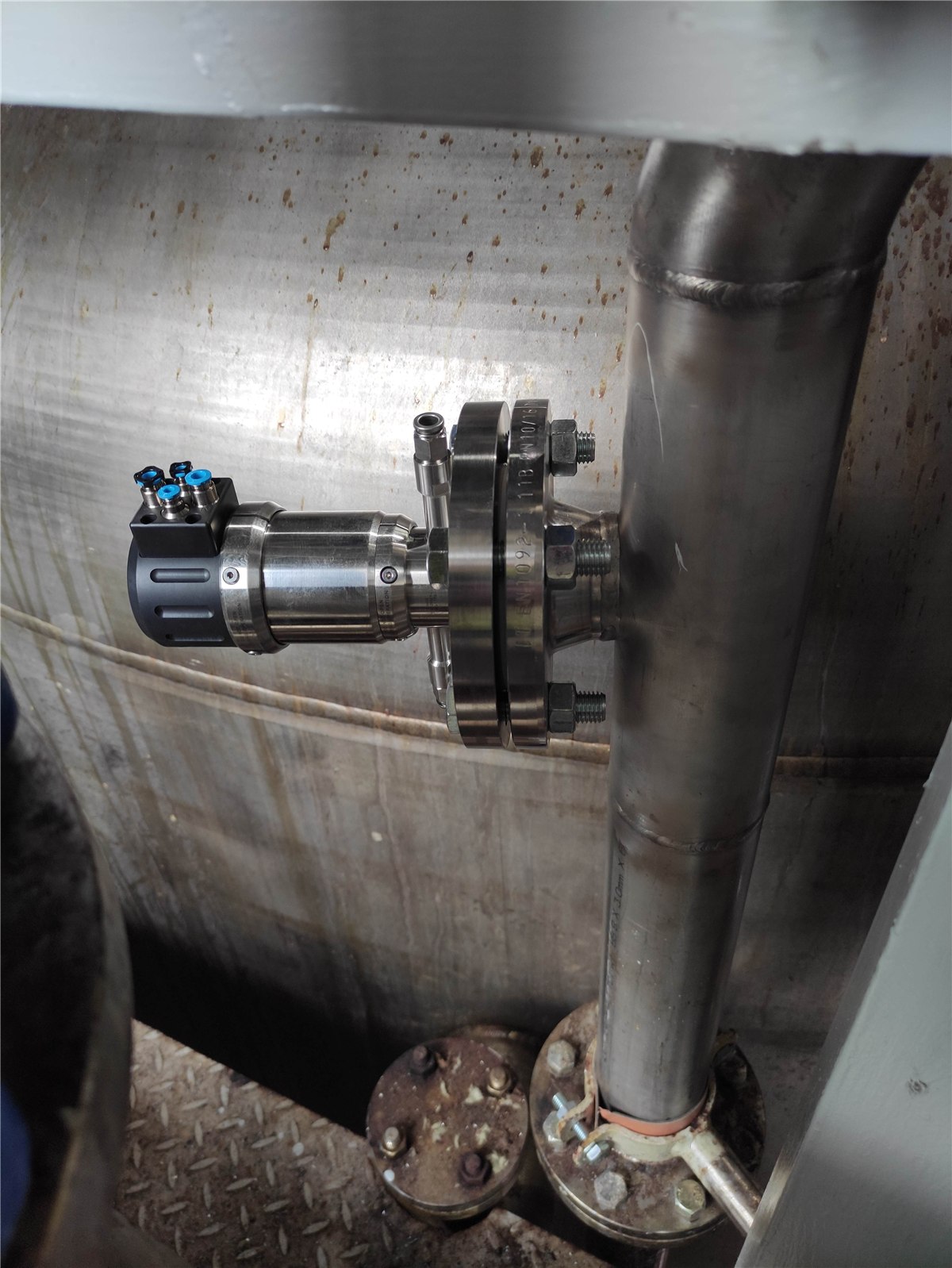
Laser excitation at 785 nm, with a 1064 nm variant for strongly fluorescent media. Spectral range 300-1650 or 300-3500 cm⁻¹ at 8 cm⁻¹ resolution.
A single acquisition takes from 5 s. The batch trajectory becomes a live curve instead of two or three lab points per cook.
AI/advanced chemometrics with a CNN core in Spectrally OS, trained on your silicone matrix and recipes - the PLS/PCA benchmark it is measured against, not a generic library calibration.
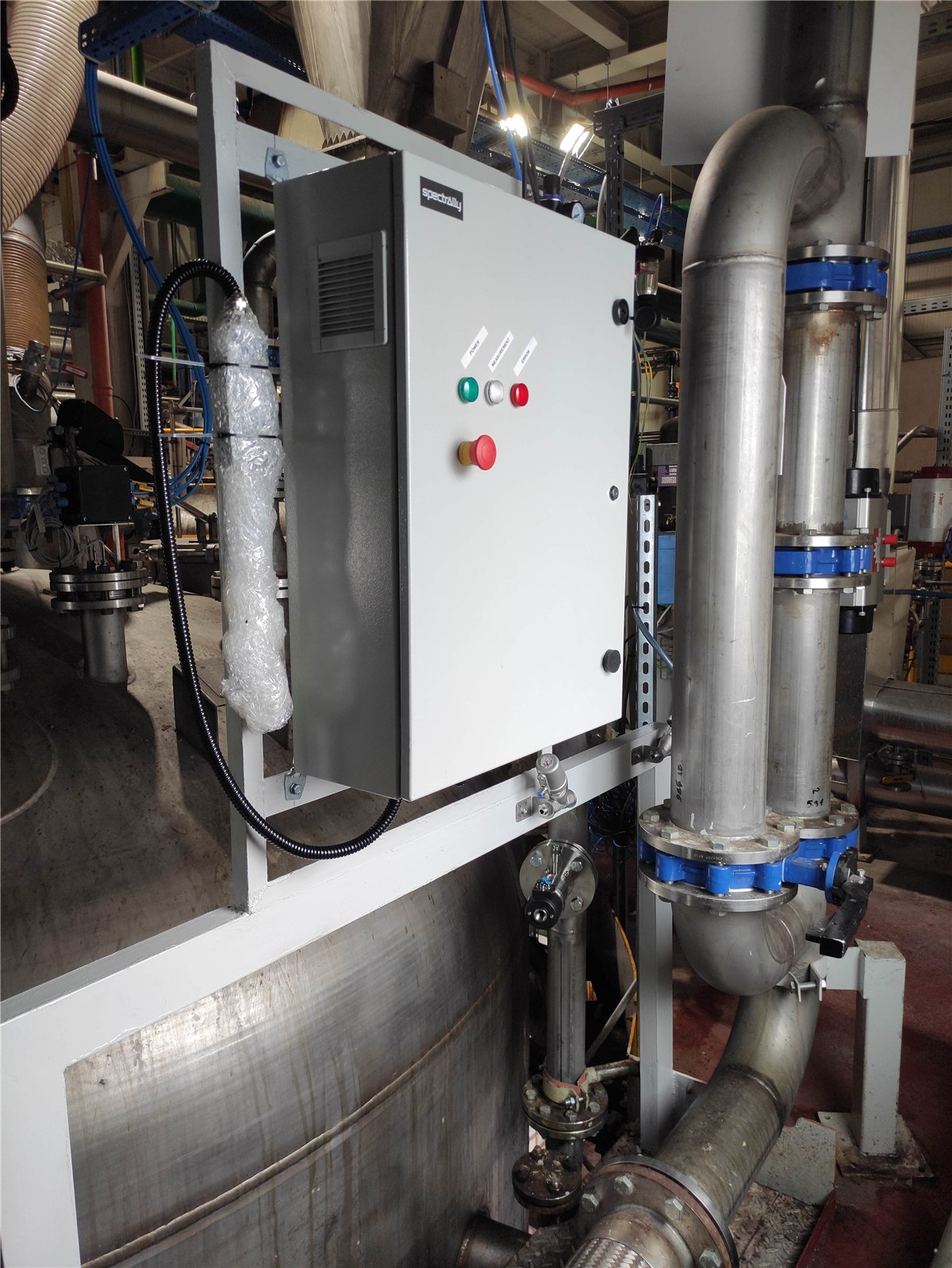
Values arrive in the PLC / DCS over PROFIBUS and PROFINET. Every measurement is stored and exportable as CSV, PDF or raw spectra.
The properties that decide whether a silicone ships.
Each value is pulled straight from the Raman spectrum by a dedicated chemometric model. Select a parameter to see where it lives on the spectrum.
Siloxane chain length / DP - the property performance rides on.
Molecular weight, set by the degree of polymerisation of the siloxane chain, decides the viscosity and the application of a PDMS grade - fluid, gel or rubber base. In most plants it is inferred from a viscosity proxy. Spectrally tracks it from the spectrum itself.
Why it decides the batch
Chain length and DP set the molecular weight, and molecular weight sets viscosity - which sets what the silicone can be used for. It is the master property of a PDMS grade, produced by polycondensation of Si-OH with elimination of water or methanol.
How it is read today
Inline viscometry gives a molecular-weight proxy but no composition. The detail comes offline: GC-FID at 30-60 min, GC/MS at 60-120 min with extraction. A viscosity number cannot tell linear PDMS from residual cyclics.
What reading it inline changes
DP is followed from the Raman spectrum during the condensation, continuously, alongside the residual cyclics and the condensation progress - molecular weight read as chemistry rather than inferred from a viscosity proxy after the reaction.
Silanol (Si-OH) content - condensation control, read live.
PDMS is built by polycondensation of Si-OH groups with elimination of water or methanol. Residual silanol content is the functional-group handle on that reaction - read live instead of after the fact.
Why it decides the batch
Silanol is what the condensation consumes. Its level tracks how far the reaction has run and sets the reactivity of the finished polymer, whether the product is a fluid, a gel or a silicone-rubber base.
How it is read today
Followed indirectly: inline viscometry sees molecular weight climb, GC-FID and GC/MS characterise the product offline at 30-120 min, but none reads the silanol group live in the reactor as the condensation runs.
What reading it inline changes
Silanol is followed continuously from the spectrum as the condensation proceeds, so the endpoint is steered on the functional group itself rather than on elapsed time or an after-the-fact viscosity read.
Vinyl content - the addition-cure handle, from the C=C band.
In addition-cure LSR and HCR, vinyl groups react with Si-H over a Pt (Karstedt) catalyst with no by-product eliminated. Vinyl content is the handle on that chemistry, read from the vinyl C=C band near 1600 cm⁻¹.
Why it decides the batch
Vinyl is one of the two reacting groups in addition cure. Its level sets the crosslink density and the mechanical properties of the cured rubber, from soft LSR gels to high-consistency stock.
How it is read today
FTIR ATR characterises vinyl on finished samples in R&D. There is no live in-reactor read: gel-time is observational and non-numeric, DSC is 30-90 min offline, and the rheometer runs off the line.
What reading it inline changes
The vinyl C=C band near 1600 cm⁻¹ is read directly and continuously, so the addition-cure formulation is verified in-process rather than on a finished coupon after the batch is made.
Residual cyclics D4/D5/D6 - the regulated by-product, read continuously.
Cyclic siloxanes D4, D5 and D6 are the regulated by-product of PDMS chemistry. Spectrally reads them from the siloxane band near 490 cm⁻¹ - cyclic versus linear - continuously, instead of in a 60-120 minute GC/MS slot.
Why it decides the batch
EU Regulation (EU) 2024/1328 caps D4+D5+D6 below 0.1% by weight in consumer products from 06.06.2026 and in leave-on cosmetics from 06.06.2027. The residual cyclics level decides whether a batch clears that hard, dated limit.
How it is read today
GC/MS at 60-120 minutes per sample plus extraction. NIR does not separate cyclic from linear siloxane, so it cannot stand in for the cyclics number that the regulation is written against.
What reading it inline changes
The 490 cm⁻¹ siloxane band distinguishes cyclic from linear directly, so residual cyclics are tracked live against the limit and each batch closes with a continuous, time-stamped record instead of a single post-batch sample.
Cure state - crosslinking confirmed in-process.
In LSR, HCR and RTV systems the cure is the crosslinking reaction between Si-H and vinyl. Spectrally confirms it in-process from the vanishing Si-H band near 2160 cm⁻¹ and the vinyl C=C band near 1600 cm⁻¹.
Why it decides the batch
The degree of crosslinking is the finished property of the rubber. For medical-grade LSR and RTV in implants, catheters and valve membranes, it is a documented, repeatable process parameter per batch under EU MDR 2017/745.
How it is read today
Gel-time (observational, non-numeric), DSC at 30-90 min offline and an offline rotational rheometer - all after the reaction, on samples that describe a batch already made.
What reading it inline changes
The Si-H band near 2160 cm⁻¹ falling as the vinyl reacts gives a live crosslinking signal, documented as a continuous process record - and for medical-grade batches, a per-batch record for the CE dossier. Residual Pt catalyst is quantified as an element by ICP: a clean division of labor, with Raman owning the composition and crosslinking side.
Chlorosilane D/T/M composition - read after the reactor, through sapphire.
The D/T/M monomer ratio - Me2SiCl2, MeSiCl3 and Me3SiCl from the Muller-Rochow process - sets the type of the final silicone. Spectrally reads the chlorosilane stream inline after the reactor through a sapphire (Al2O3) window that stands up to the corrosive HCl by-product.
Why it decides the batch
The D/T/M ratio determines whether the downstream product is a linear fluid, a resin or an endcap. It sets the silicone's architecture from the monomer up, and it carries into every REACH composition record for the substances placed on the market.
How it is read today
GC at 20-40 minutes, with HCl protection required at the sampling point. NIR has limited selectivity with HCl present, so it struggles to resolve the monomer split cleanly.
What reading it inline changes
The chlorosilane composition is read inline immediately after the Muller-Rochow reactor, through a sapphire window rated for the corrosive stream, so the monomer split is controlled in the process instead of confirmed by a protected lab sample.
What comes off your critical path.
None of these methods disappears. They move from real-time gatekeeper to periodic verification - GC/MS and DSC stay the reference methods - and the batch decision stops waiting for them.
See these parameters read on your own silicone.
Send representative samples or process data from your PDMS, LSR/HCR, chlorosilane or medical-grade silicone stream. We build and validate a chemometric model on your silicone matrix and deliver the parameters inline Raman reads on your line - the spectra, the band assignments, the model metrics against your reference method (GC/MS, DSC) and a clear result.