Chemistry coverage across the sulfur-fertilizer family.
ATS, KTS and CaTS thiosulfate fertilizers and ammonium sulfate share one master variable - the thiosulfate or sulfate number that has to hit spec, stream after stream. Spectrally X1 INLINE reads it inline - a probe in the process stream itself, reporting to your control system in about 5 seconds - in place of a 20-60 minute titration or ion-chromatography loop.
One measurement layer across the sulfur-fertilizer family.
Thiosulfate and sulfate fertilizers are made by absorbing NH3, H2S and SO2 gases into a continuous aqueous stream. Composition is still read offline: iodometric thiosulfate titration in 20-30 minutes, ion chromatography for the full anion set in 30-60 minutes, densitometry as a concentration proxy with no qualitative composition. The absorption process never stops, so an offline answer arrives after the stream has moved on. Spectrally X1 INLINE puts one Raman measurement layer across the family - a probe in the stream or tank, a chemometric model per matrix, values in your control system in seconds. The sulfur-fertilizer niche carries little published inline-measurement work, so a documented Raman read on the stream is a credible technical position, stated as a fact rather than a claim.
Thiosulfate concentration and the N/S ratio define the product. Both read live on the stream, in place of a 20-30 min iodometric titration.
12% N + 26% S, produced by absorbing NH3, H2S and SO2 gases. Sulfur fertilizer and nitrification inhibitor, run as a UAN/RSM additive or standalone.
Related liquid thiosulfate fertilizers on the same anion. Same read - thiosulfate concentration and solution homogeneity, inline.
Nitrogen and sulfur as ammonium sulfate. The sulfate band near 976 cm-1 is read directly off the spectrum.
Ammonium thiosulfate: the spec is the thiosulfate number.
ATS is 12% N + 26% S, made by absorbing NH3, H2S and SO2 gases into an aqueous stream, and used as a sulfur fertilizer and nitrification inhibitor - a UAN/RSM additive or a standalone on sulfur-poor soils. Thiosulfate concentration and the N/S ratio have to hold spec through the run; a deviation surfaces downstream as customer complaints and CE-certification problems.
From a 20-30 minute titration to a live stream value.
The absorption process runs a continuous stream, so the offline loop is always behind it: iodometric titration returns thiosulfate in 20-30 minutes, ion chromatography resolves the full anion set in 30-60 minutes, and densitometry gives only a concentration proxy with no composition. The probe reads the liquor where it flows:
- Thiosulfate concentration, live on the stream instead of by 20-30 min iodometric titration
- N/S ratio, confirmed continuously rather than once per shift
- Solution homogeneity across tank and line, without spot sampling
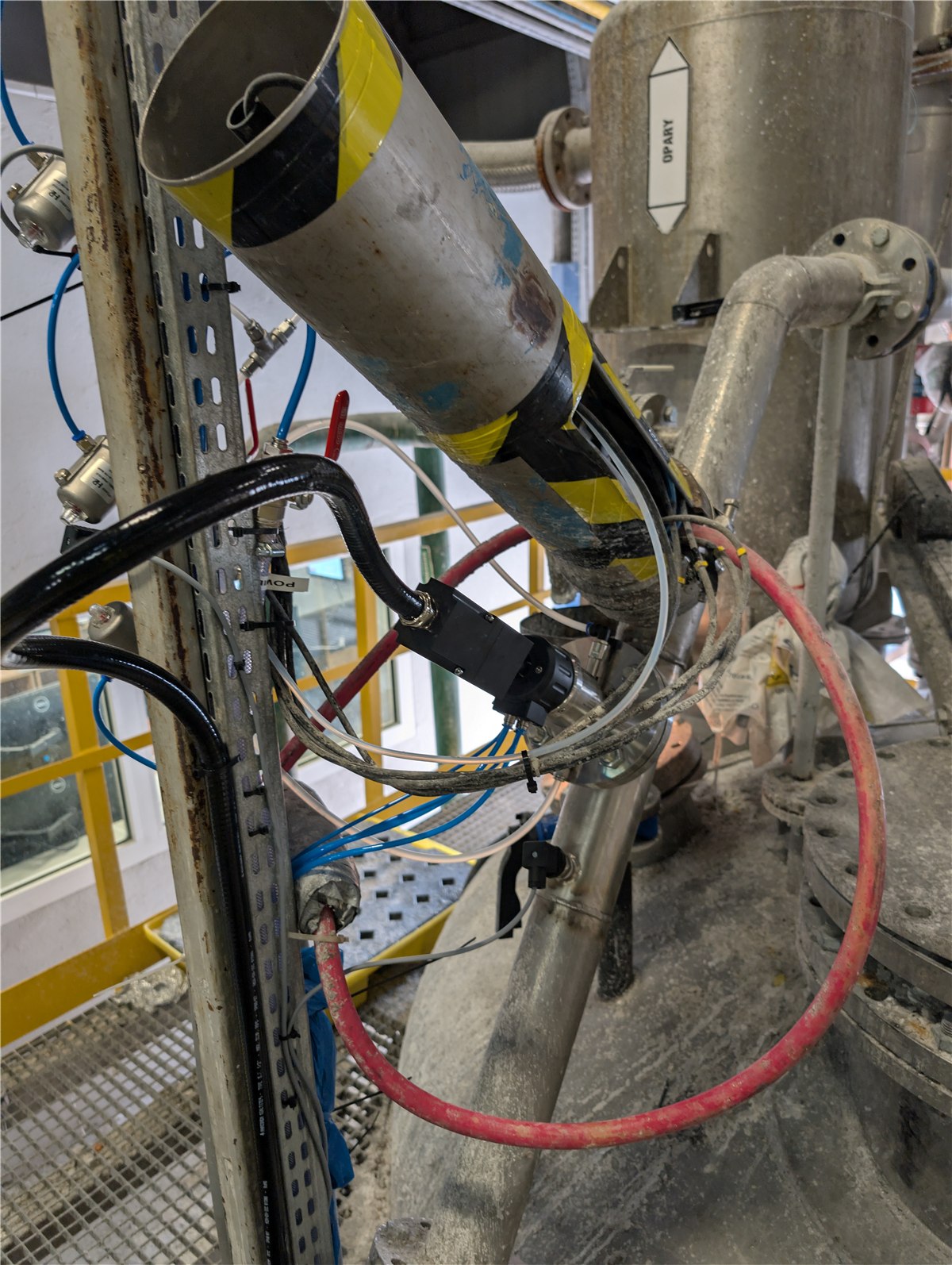
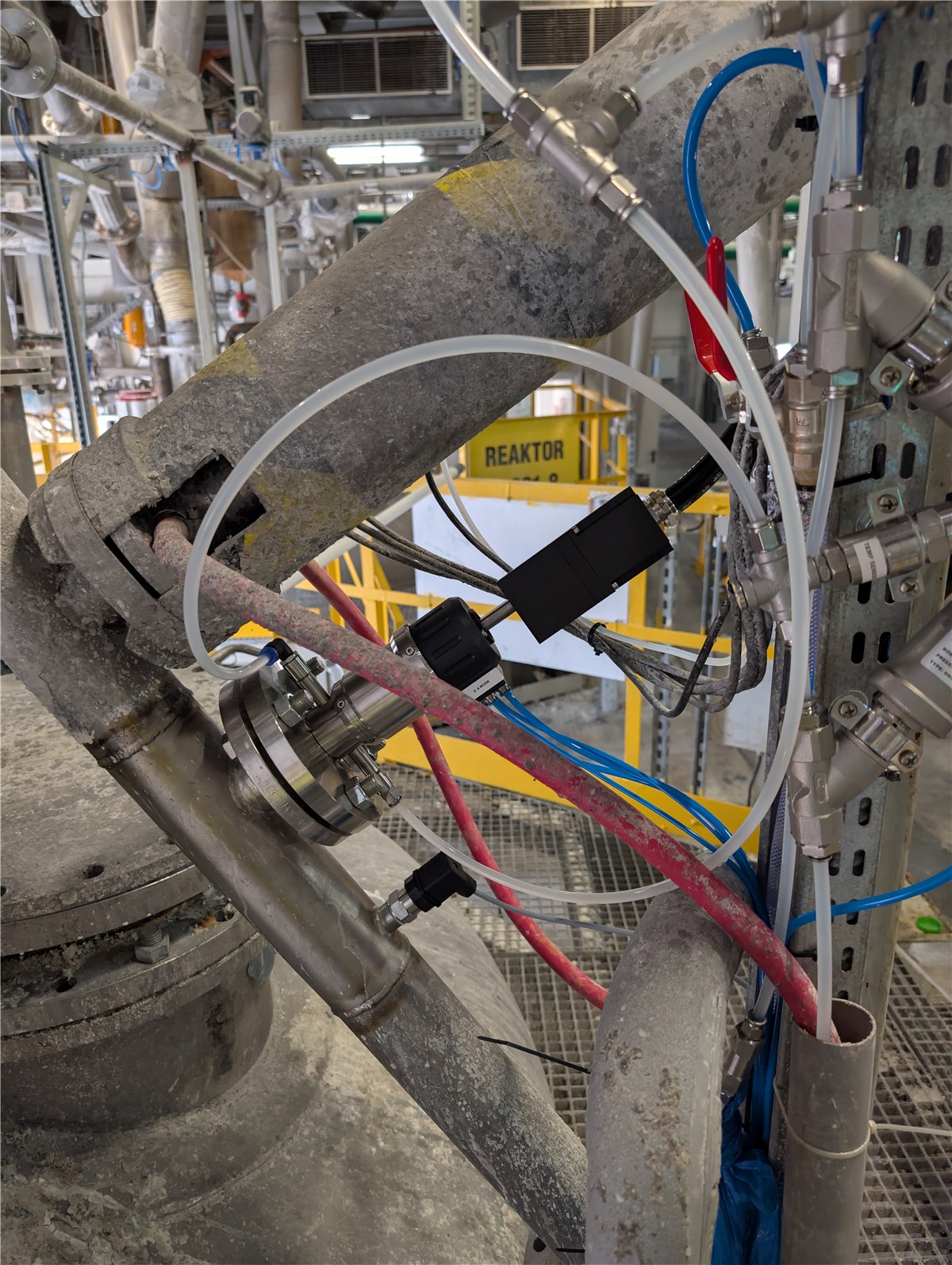
Thiosulfate S2O3^2- is a strong Raman-active oxyanion, and water is a weak Raman scatterer, so Raman reads the aqueous stream well inline. ATS liquors are clear, low-fouling streams; the self-cleaning retractable probe cycles retract → rinse → return to keep the optical window clear through long campaigns.
A strong Raman-active oxyanion
The thiosulfate ion S2O3^2- has well-defined Raman bands and is read directly in the aqueous stream, with no reagents and no sampling. Gekko classifies ATS as TIER S - a ready-to-deploy configuration on the thiosulfate matrix.
Sulfate band at 976 cm-1
In a Gekko fertilizer study (FS-001) the sulfate symmetric stretch was measured directly near 976 cm-1; in rinse water (FS-003) sulfate reads as a cleanliness handle and nitrate is detectable. The sulfate side of the product carries a direct optical handle.
One plant, documented economics (resins)
A European PF-resin producer ran a self-cleaning reactor probe on phenol and formaldehyde inline: payback in roughly 6.5 months, about 180,000 EUR saved per year, -10% raw-material losses, -12% production waste and under 1.5% batch-to-batch variability. These numbers are from the resin segment; your ATS feasibility study puts the equivalent figures on your own stream.
What comes off the ATS critical path
Potassium and calcium thiosulfate: the same read, a different cation.
KTS and CaTS are liquid thiosulfate fertilizers built on the same anion as ATS. The measurement approach is identical - thiosulfate concentration and solution homogeneity read inline, against the same 20-30 min iodometric titration and 30-60 min ion chromatography. Only the chemometric model changes, retrained on the KTS or CaTS matrix.
One probe, the whole thiosulfate family.
The thiosulfate oxyanion carries the signal regardless of the cation, so the same platform and workflow cover the potassium and calcium grades. The probe reads the blending line or the storage tank directly:
- Thiosulfate concentration, live on the blending line or in the tank
- Solution homogeneity across the batch, without spot sampling
- Nutrient-to-sulfur ratio confirmed continuously as the product is made
The self-cleaning retractable probe holds the same clear-liquor advantage as on the ATS stream, and the model is validated on your KTS or CaTS matrix during the feasibility study.
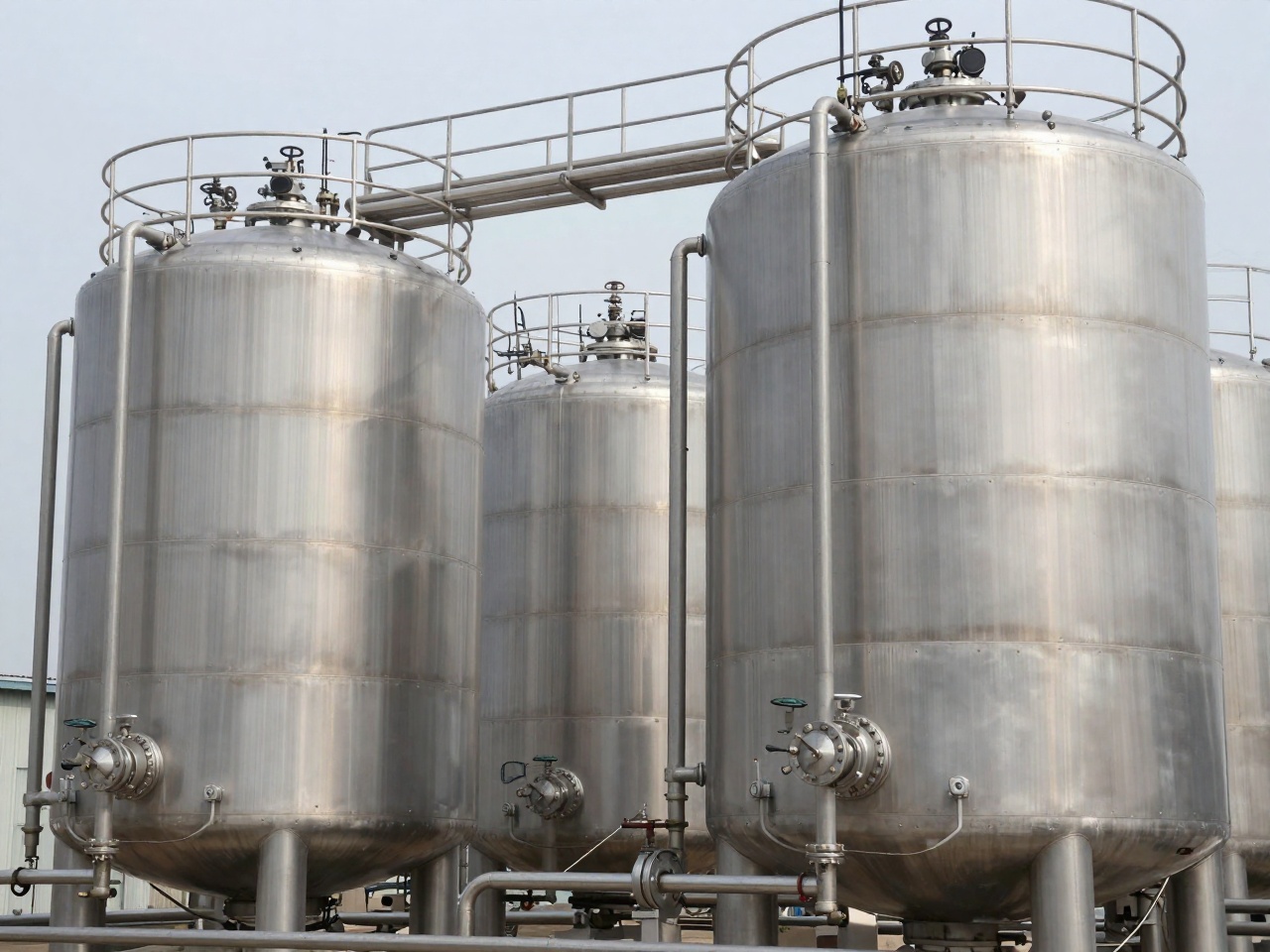
Ammoniumsulfat: Die Sulfatbande wird direkt ausgelesen.
AMS führt Stickstoff und Schwefel als Ammoniumsulfat. Das Sulfat-Oxyanion SO4^2- ist ein starker Raman-Streuer mit einer klar definierten symmetrischen Streckschwingungsbande bei etwa 976 cm⁻¹, die in einer Gekko-Düngemittelstudie (FS-001) direkt gemessen wurde. Somit werden Sulfatkonzentration und Lösungsreinheit inline ohne Titration oder Ionenchromatographie erfasst.
Sulfat bei 976 cm⁻¹, direkt aus dem Spektrum.
Die symmetrische Streckschwingungsbande bietet eine direkte, spezifische Messgröße für die Sulfatseite des Produkts – anstelle einer 30–60-minütigen Ionenchromatographie-Schleife oder eines densitometrischen Näherungswerts:
- Sulfatkonzentration (SO4^2-) aus der symmetrischen Streckschwingungsbande bei 976 cm⁻¹
- Lösungshomogenität und Stromklarheit, live
- Trendabweichungen werden prozessbegleitend erkannt, bevor sie zu Kundenbeschwerden führen
Gleiche Plattform, gleicher Workflow wie bei den Thiosulfat-Strömen – das Modell wird während der Machbarkeitsstudie auf der AMS-Matrix neu trainiert und gegen Ihre Referenzmethode validiert.
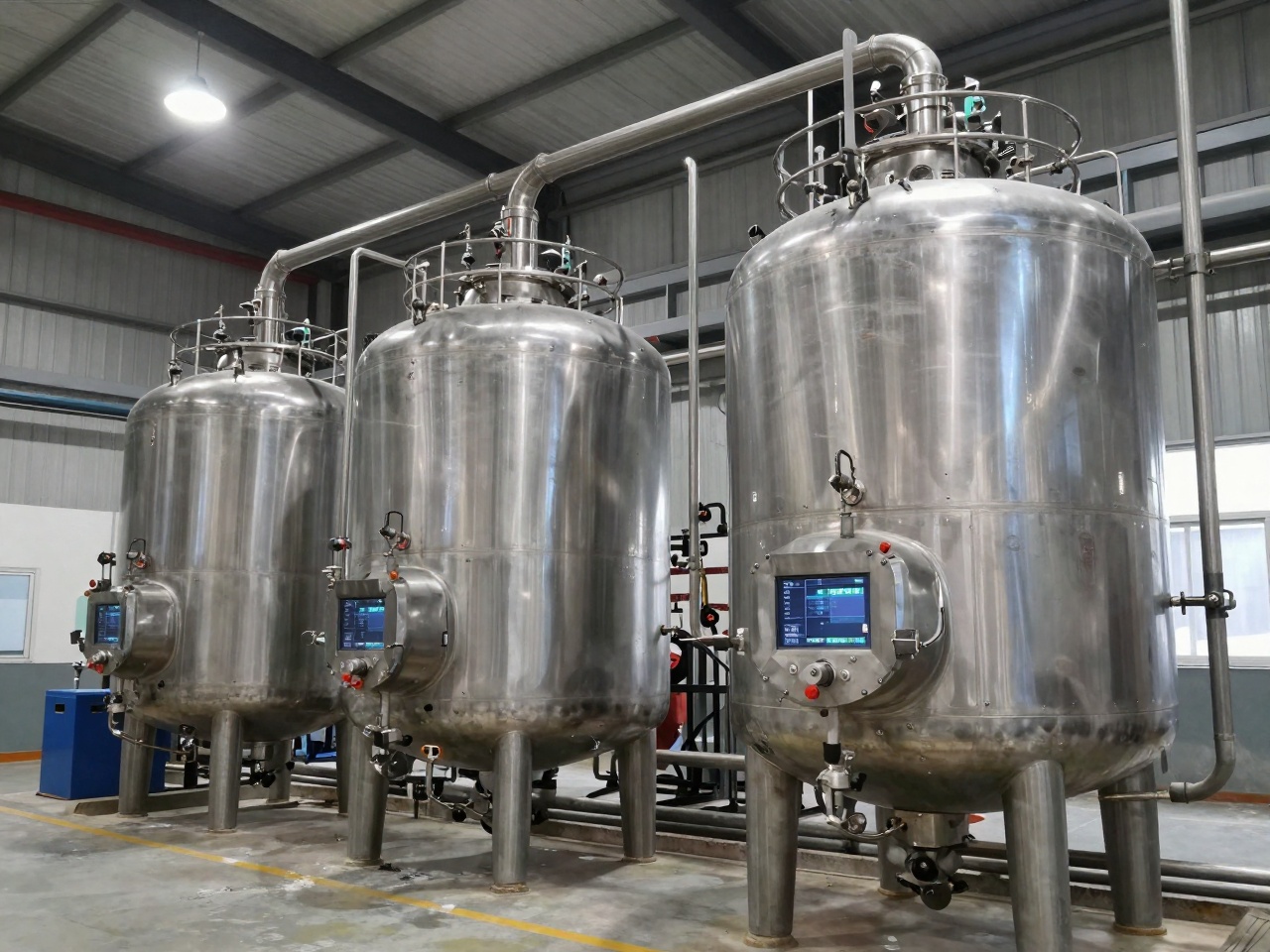
Was von der AMS-Kritikalität entfällt
Drei Chemien. Dasselbe Instrument, derselbe Workflow.
Jeder oben genannte Strom wird mit derselben Plattform gemessen: eine Spectrally X1 PROBE im Strom oder Tank, der Spectrally X1 INLINE-Analysator bis zu 100 m entfernt per Faser und Spectrally OS, das Spektren in Prozesswerte umwandelt. Was sich je nach Chemie ändert, ist das chemometrische Modell – aufgebaut und validiert auf Ihrer Matrix während der Machbarkeitsstudie.
Eine Sondenfamilie für alle Ströme
316L-Eintauchsonde, IP67, ATEX/IECEx Zone-0-Versionen, -40 bis +125 °C, bis 16 bar, pH 2–10 kontinuierlich. Das selbstreinigende, ausfahrbare Modul durchläuft Zyklen aus Ausfahren, Spülen und Rückkehr, um die Optik klar zu halten; ATS-, KTS- und AMS-Lösungen sind klare, wenig verschmutzende wässrige Ströme.
Ein dediziertes Modell pro Matrix
KI und fortschrittliche Chemometrie mit CNN-Kern in Spectrally OS, trainiert auf Ihren Thiosulfat- oder Sulfat-Rezepturen gegen Laborreferenzwerte – iodometrische Titration und Ionenchromatographie – und genauer sowie schneller als herkömmliches PLS/PCA. Die Auto-Kalibrierreferenz ist in die Sonde integriert; Modelle aktualisieren sich ohne Anlagenstillstand.
Werte, keine Spektren, im Kontrollraum
Konzentrationen und Verhältnisse werden über PROFIBUS / PROFINET als Prozess-Tags an PLC/DCS und MES/SCADA/LIMS übermittelt. Jede Messung wird gespeichert und exportierbar – CSV, PDF oder Rohspektren – als chargenbezogener, zeitgestempelter Zusammensetzungsdatensatz, der ein CE-Dossier gemäß (EU) 2019/1009 stärkt.
ATS, KTS/CaTS und AMS auf einer gemeinsamen Messebene.
Eine einzelne Raman-Erfassung dauert ab 5 Sekunden.
Iodometrische Thiosulfat-Titration, von der Kritikalität genommen.
Ionenchromatographie mit vollständiger Anionenanalyse am oberen Ende ihres Bereichs.
Beginnen Sie mit Ihrem eigenen Thiosulfat-Strom.
Senden Sie repräsentative Proben aus Ihrem ATS-, KTS-, CaTS- oder AMS-Prozess. Wir erstellen und validieren ein chemometrisches Modell auf Ihrer Matrix im Gekko-Labor, benchmarken es gegen Ihre iodometrische Titration oder Ionenchromatographie und berichten exakt, was Inline-Raman an Ihrem Strom misst. Ihre Machbarkeitsstudie legt die Zahlen auf den Tisch, bevor eine Hardware-Entscheidung getroffen wird.