Your VOC and quality dossier is written during the cook.
Directive 2004/42/EC caps the VOC content of decorative paints and coatings, and residual monomer sits on every finished-paint spec. Both trace back to the reaction endpoint - acid value, viscosity, monomer conversion - set in the reactor, not in the lab afterwards. A continuous, time-stamped record measured inline, in the reactor itself with no sample drawn, turns that endpoint into a dossier a customer audit can read line by line.
VOC compliance starts at the reaction endpoint.
Directive 2004/42/EC (Decopaint) sets VOC limits for decorative paints and coatings. The resin is upstream of that limit: solvent correction and residual monomer - the VOC a finished paint carries - trace back to the reaction endpoint, set when the resin is cooked.
What the rules cover
Directive 2004/42/EC (Decopaint) caps the VOC content of decorative paints and coatings placed on the market. Residual-monomer limits in finished paint make monomer conversion a quality and environmental parameter, documented for the technical dossier behind the CE mark.
Who it touches in the coatings chain
Producers of alkyd, acrylic and composite resins - the binders for oil, alkyd, acrylic and high-solids coatings. The resin's acid value, monomer conversion and residual monomer are upstream of the paint's VOC compliance, documented batch by batch.
What continuous measurement adds
The endpoint numbers come today from acid-value titration (ISO 3682, 30-60 min) - which means stopping the reactor and drawing a manual sample from a medium above 220 C - and residual-monomer GC (30-60 min). An inline Raman probe reads acid value, viscosity and monomer conversion in about 5 s in the reactor, with no sample drawn, and writes a time-stamped record the dossier can draw on continuously.
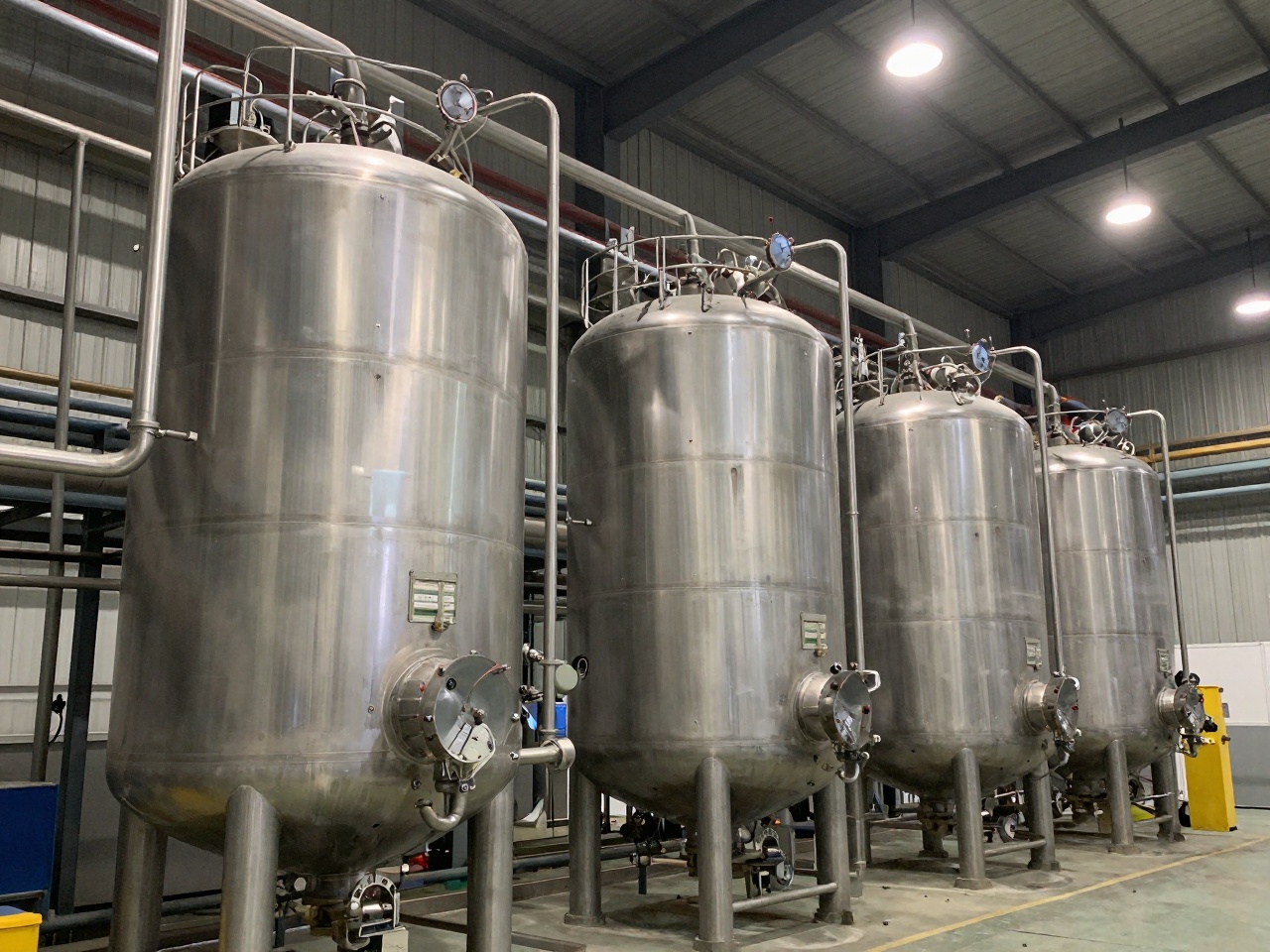
One record carries the VOC and quality trail end to end.
The environmental and quality dossier is built from a short list of numbers. Read continuously in the reactor, they arrive already time-stamped and ready for the file - and the same measurement covers the safety case for solvent-bearing media.
VOC limits on paints and coatings
Decopaint caps the VOC content of decorative coatings. Precise endpoint control - acid value and monomer conversion held on target - cuts solvent correction and residual monomer, so the VOC the finished paint carries is lower and documented at source.
Safe measurement in solvent-bearing reactors
Alkyd media carry flammable solvents such as white spirit D40 and xylene. An ATEX/IECEx Zone 0 configuration of the Spectrally X1 PROBE with a 30 mW laser is planned for June 2027. Until then, the measuring point must sit outside the Ex zone.
Enforced on demand
Enforcement runs through customer specification, audit and the CE/technical dossier. A time-stamped inline trail is the answer to an audit that asks how the endpoint and residual monomer were held, batch after batch.
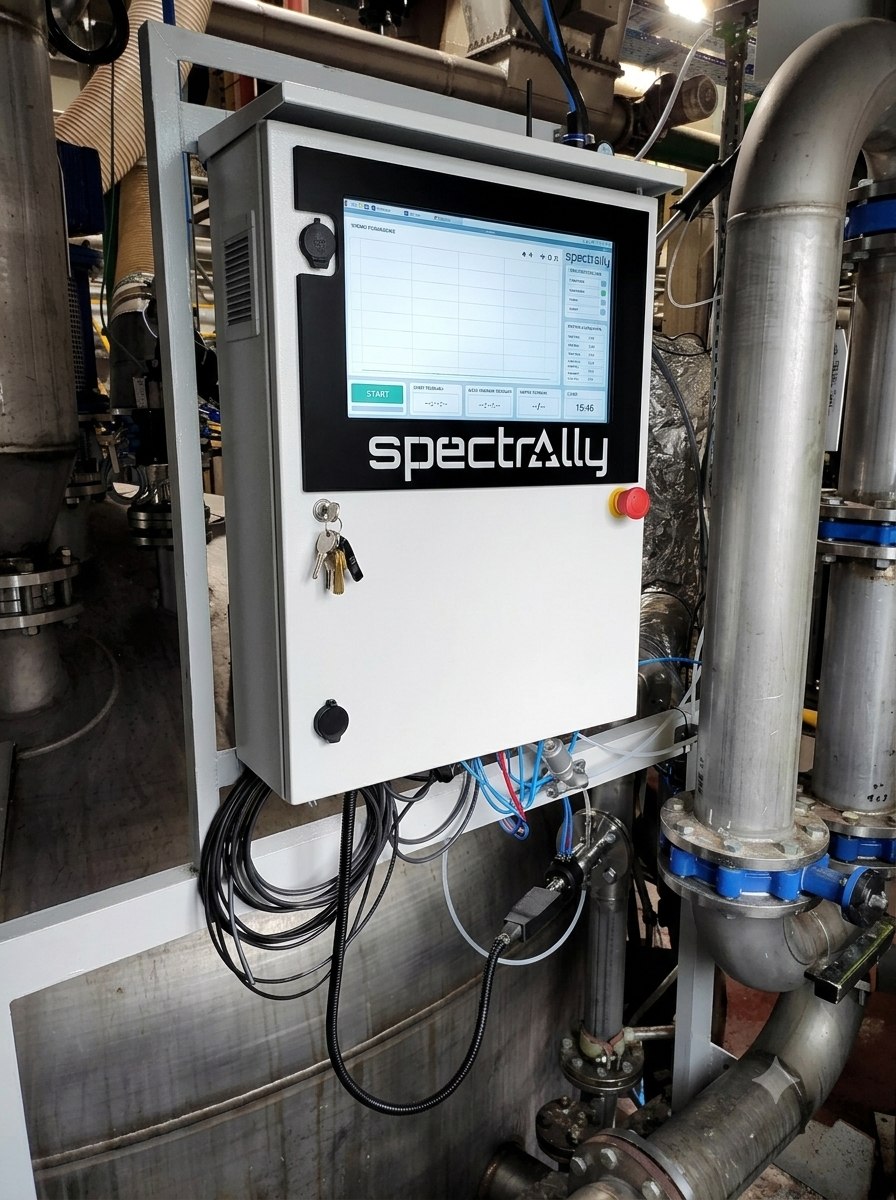
What the analyzer reads here
Spectrally X1 INLINE measures acid value, hydroxyl value, viscosity, monomer conversion and %solids directly in the reactor - continuously, with no sample drawn and no reactor stop.
Acid value has no single dedicated band, so a CNN chemometric model reads the whole Raman spectrum, built on the acid/ester carbonyl band ratio near ~1710 / ~1730 cm⁻¹. Feasibility on real resin put the model against the lab at R 0.982-0.998, MAE about 0.015 mg KOH/g; viscosity from the same spectrum at R 0.988-0.998.
Monomer conversion reads from the disappearing C=C monomer band - the residual-monomer number that governs VOC and odour, delivered in seconds instead of a 30-60 min GC. One record covers the environmental parameter and the quality endpoint together.
The dossier holds a handful of numbers - batch after batch.
Regulation and the buyer set the frame. The working figures - acid value, viscosity, monomer conversion, %solids - define the product, and holding them consistently is where the measurement problem actually lives.
The esterification endpoint carries the VOC and reactivity of the finished coating. Acid value from the acid/ester C=O band ratio and viscosity from the same spectrum, read live, keep the endpoint honest instead of stopping the reactor for a titration.
Monomer conversion from the C=C band is the VOC-and-odour number and the quality number in one - measured in the reactor, not returned 30-60 min later by GC.
Cure tracked through the vanishing vinyl C=C band (~1600 cm⁻¹) and the Si-H band (~2160 cm⁻¹), so the endpoint is read on data rather than gel-time observation.
A continuous inline trail replaces a titration point per batch, so the VOC and quality figures behind the dossier are documented across the whole cook, not sampled from it.
The compliance record, two ways
See the batch record your reactor would write.
Send representative samples from your alkyd, acrylic or composite-resin process. We build and validate a chemometric model on your matrix and show the acid value, viscosity and monomer conversion an inline probe would log for every batch - the time-stamped VOC and quality trail your dossier draws on, before any hardware decision.