Spectrally X1 INLINE - built for the silicone line.
A process Raman analyzer for continuous composition and cure measurement inline - read directly in the reactor or line rather than pulled to a lab - 24/7, with no sampling and no consumables.
A process Raman analyzer built for the line.
Spectrally X1 INLINE reads siloxane composition and cure state directly in the reactor or line - 24/7, without sampling and without consumables. The spectrum is acquired in the process, the result arrives in under 5 seconds, and the value streams to your PLC or DCS continuously.
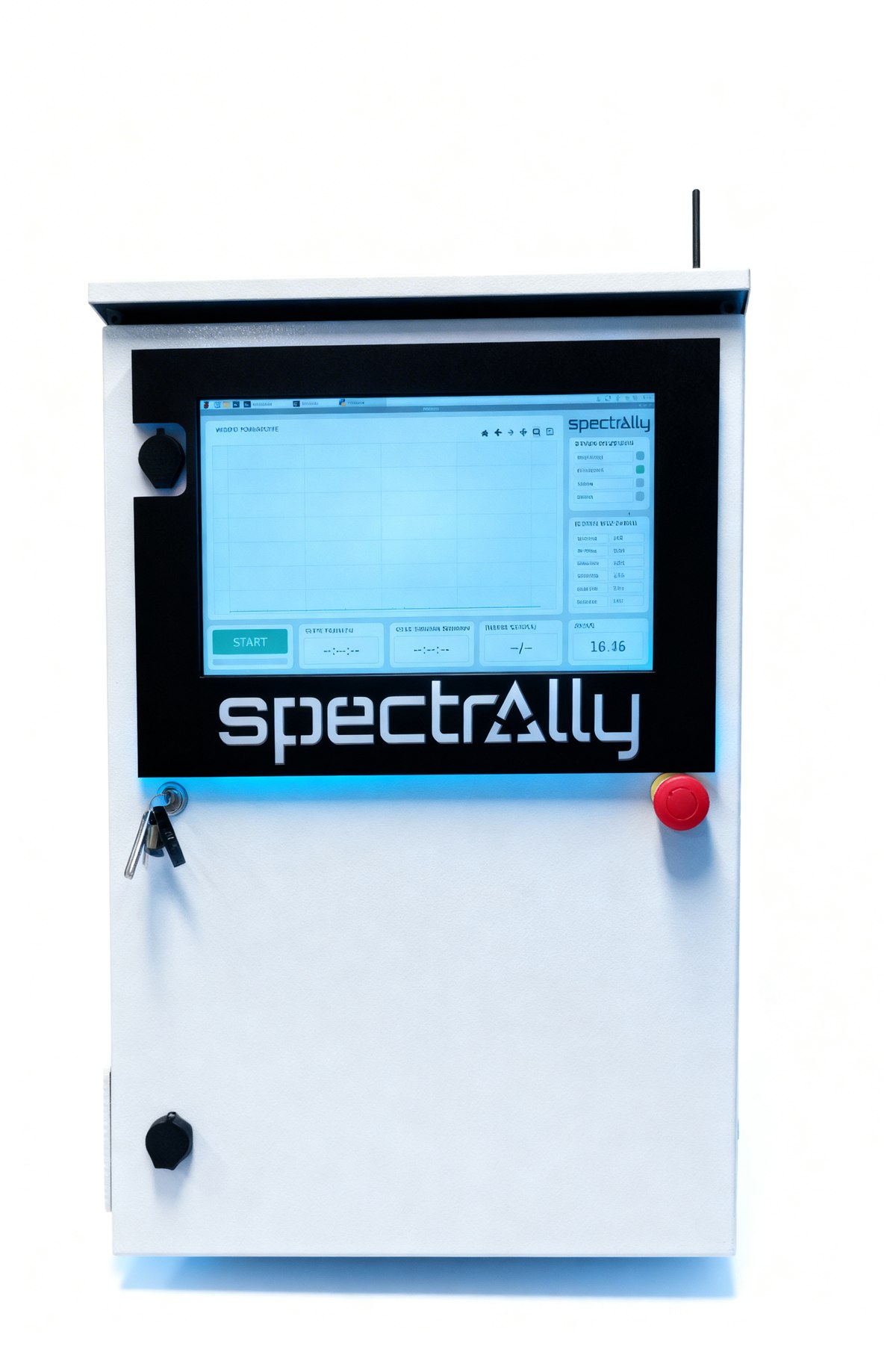
Two excitation wavelengths are available - 785 nm and 1064 nm, the latter for strongly fluorescing media - at 600 mW and 800 mW respectively, limited to 30 mW for ATEX applications. Detection is a back-thinned, TEC-cooled CCD with a proprietary TEC controller.
| Measurement principle | Raman spectroscopy |
| Laser wavelength | 785 nm / 1064 nm |
| Laser power | 600 mW @ 785 nm; 800 mW @ 1064 nm; 30 mW for ATEX applications |
| Spectral range | 300-1650 cm⁻¹ or 300-3500 cm⁻¹ |
| Spectral resolution | 8 cm⁻¹ |
| Acquisition time | 5-300 s |
| Detector | Back-thinned CCD, TEC-cooled |
| Measurement channels | Up to 2 (expandable on request) |
| Fiber optic reach | Up to 100 m |
| Communication | PROFIBUS, PROFINET, GSM |
| Calibration | Automatic - reference integrated in the probe |
| Laser lifetime | Min. 2 years |
| HMI | Touchscreen (SpectrallyUI) |
| Software | Spectrally OS on Debian GNU/Linux 13.2 |
| Probe | Spectrally X1 PROBE - IP67, ATEX / IECEx Zone 0, self-cleaning; fused silica or sapphire (Al₂O₃) window |
Values per the Spectrally Raman Analyzers product catalog, 2026-05.
The part of the system that lives in your process.
An immersion Raman probe for direct in-situ analysis in the reactor or line - no sampling, no conditioning loop. Rated to 16 bar and +125 °C, pH 2-10 in continuous service and 1-14 short-term, with IP67 ingress protection and an ATEX / IECEx Zone 0 rating. Fused silica is the standard window; a sapphire (Al₂O₃) window handles the corrosive HCl of a chlorosilane stream.
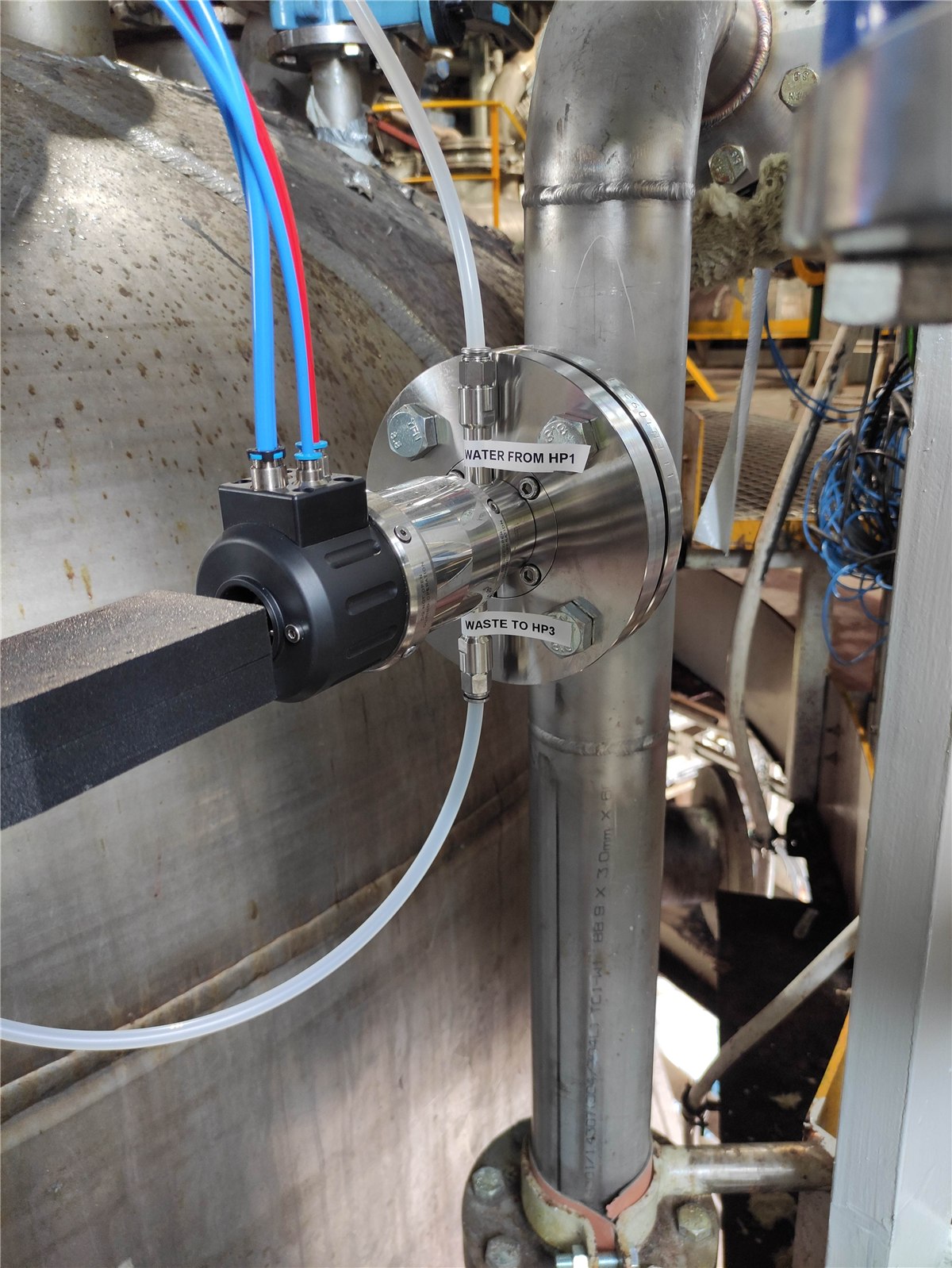
The probe measures in reactors, pipelines and process tanks, in batch and continuous operation. It handles liquid silicones, fluids and slurries - from PDMS condensation through LSR/HCR cure and the chlorosilane line.
| Probe type | Immersion, dual fiber-optic connection |
| Laser wavelength | 785 nm / 1064 nm |
| Process pressure | Up to 16 bar |
| Process temperature | -40 to +125 °C |
| Process pH | 2-10 continuous; 1-14 short-term |
| Ingress protection | IP67 |
| Hazardous areas | ATEX / IECEx Zone 0 |
| Housing | 316L stainless steel; POM-C / POM-C ESD (ATEX version) |
| Optical window | Fused silica standard; sapphire (Al₂O₃) for corrosive chlorosilane / HCl media |
| Mounting | Flange, Tri-Clamp, retractable process holder |
| Cleaning | Self-cleaning module - automatic retract-rinse-return cycle |
Dual fiber-optic connection
Separate excitation and collection fibers simplify installation and keep the signal stable. The probe connects to the analyzer over a fiber-optic cable - up to 100 m of reach.
Immersion install, no bypass
Mounts directly in the reactor, pipeline or tank via flange, Tri-Clamp or retractable process holder. No sample extraction, no conditioning loop between the silicone and the measurement.
Window and area matched to the medium
Fused silica is standard; a sapphire (Al₂O₃) window handles the corrosive HCl by-product of a chlorosilane stream. ATEX / IECEx Zone 0, with laser power limited to 30 mW for ATEX applications.
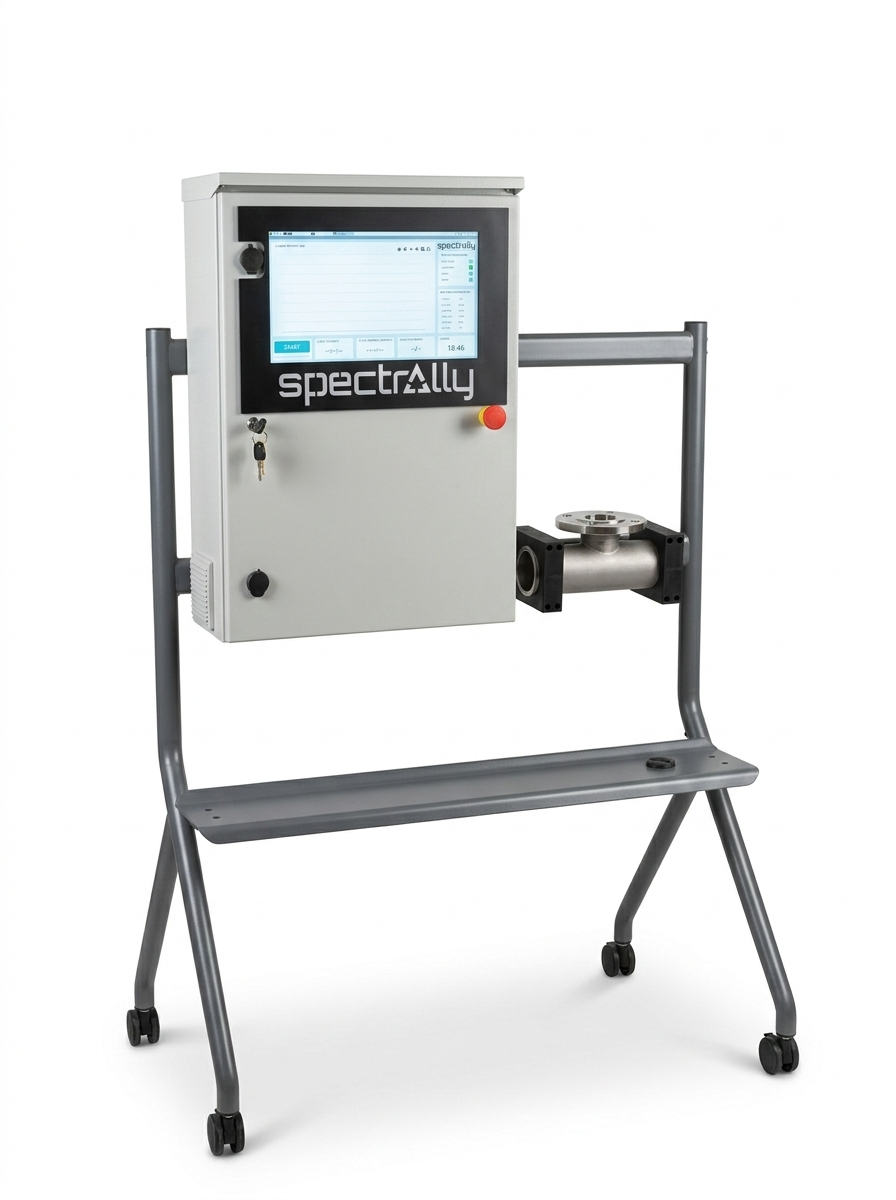
Probe at the process, analyzer cabinet up to 100 m away.
Process rating of the immersion X1 PROBE, up to +125 °C.
Across a 300-1650 or 300-3500 cm⁻¹ spectral range.
Two measurement points per analyzer, expandable on request.
From raw spectrum to an operational answer.
Spectrally OS is the analytical layer of the platform. It translates spectra into concentrations, ratios and cure state, flags deviations, raises alarms and writes the quality record - locally, on the analyzer.
The analytical work runs on AI / advanced chemometrics with a CNN core - deep pattern recognition across the diagnostic silicone bands: Si-H ~2160 cm⁻¹, vinyl C=C ~1600 cm⁻¹ and the cyclic/linear siloxane band ~490 cm⁻¹. Classical PLS and PCA are carried as the benchmark this core is measured against.
| Supported instruments | Spectrally X1 LAB / X1 PORTABLE / X1 INLINE |
| Predictive models | AI / advanced chemometrics, CNN core (PLS / PCA benchmark) |
| Spectral database | Proprietary + public, ~28,000 spectra |
| Operator interface | SpectrallyUI, touchscreen |
| Operating system | Debian GNU/Linux 13.2 |
| Calibration | Automatic, based on the reference signal readout |
| Data export | CSV / PDF / RAW |
| User management | Role-based access control (RBAC) |
| Data storage | Local database |
| Industrial protocols | PROFIBUS / PROFINET / GSM |
Deviation flags, not just numbers
Cure PASS/FAIL classification, anomaly detection and batch-conformity checks against specification. Alarms and quality reports are written for plant operators, not spectroscopists.
A model lifecycle, not a black box
Calibration, validation, maintenance. A model starts in feasibility on your silicone matrix, is refined on production data, and re-calibrated when a grade or recipe changes. Every model change is logged and auditable.
No line stop for updates
Model updates deploy without stopping the analyzer or the line. Measurement and local logging keep running if the network drops - data lives in the local database.
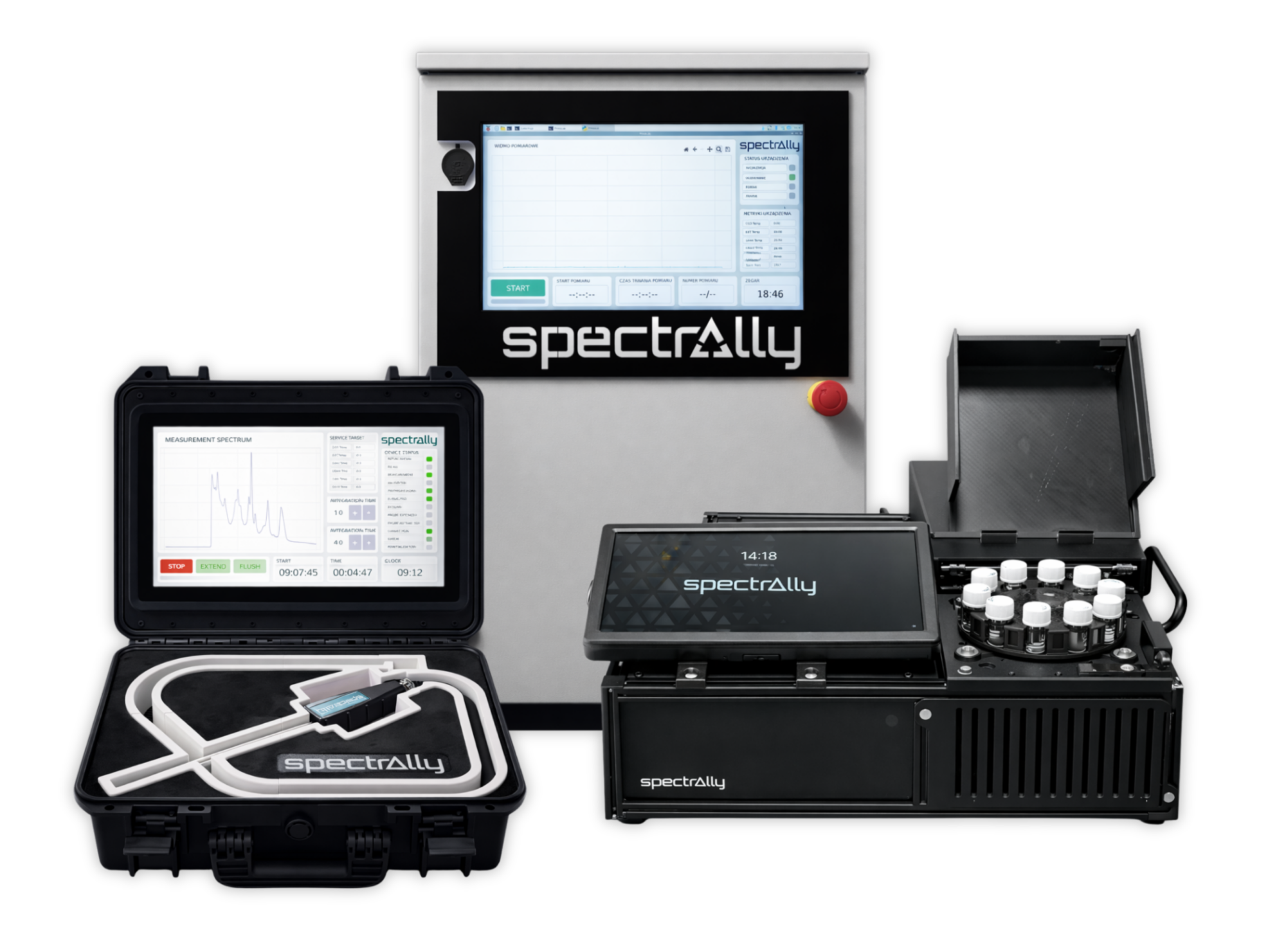
One software layer across the Spectrally family. Models built during feasibility on Spectrally X1 LAB migrate to Spectrally X1 INLINE in production - the same analytics, moved from the lab bench to the silicone line.
What changes against GC/MS, gel-time, DSC and NIR.
The differences are physical, not promotional. These are the factual points that matter for a silicone stream - and how the lab methods and inline Raman divide the work.
A clean division of labor
Inline Raman moves the composition and cure measurement into the process, in seconds, where decision time and continuity decide the batch. The lab methods keep doing what they do best - verifying against a continuous, time-stamped inline record.
The installation, in practical terms.
What the analyzer needs from your plant, and what it does not.
The probe sits at the process. The analyzer cabinet can sit up to 100 m away, connected by fiber.
One analyzer serves two measurement points. More channels available on request.
Runs against a reference integrated in the probe - no manual recalibration routine.
From power-on to measurement. Continuous 24/7 operation after that.
Utilities
230 V AC, 50/60 Hz, 300 W power draw. Operating environment 0-45 °C and 20-70% RH, non-condensing.
Process connections
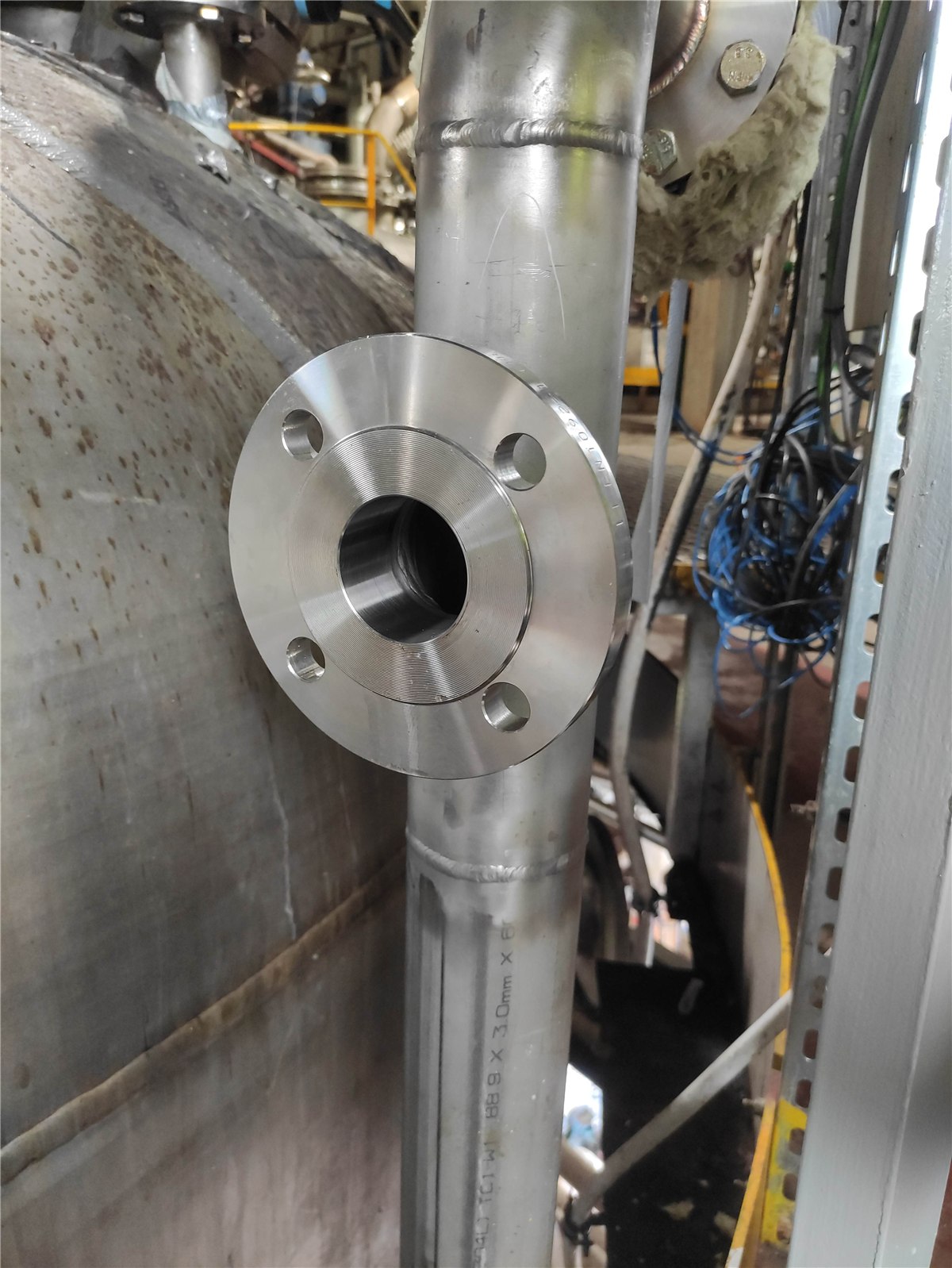
Flange, Tri-Clamp or retractable process holder, matched to the reactor or line. A sapphire window is specified where a chlorosilane stream carries corrosive HCl. Custom designs on request.
No consumables
No reagents and no consumables in routine operation. Rated laser lifetime is a minimum of 2 years.
Service and model upkeep
Installation and service are performed by authorized Gekko Photonics technicians. Model maintenance runs through Spectrally OS - validation, re-calibration when a grade or recipe changes, deployed without stopping the line.
Put the analyzer through your silicone first.
Send representative samples or R&D data from your PDMS, LSR/HCR, chlorosilane or medical-grade silicone process. We build and validate a chemometric model on your silicone matrix in the Gekko lab and report exactly what Spectrally X1 INLINE reads on your line - before any hardware decision.