Five process values from one Raman spectrum.
Thiosulfate concentration, the N/S ratio, solution homogeneity, sulfate and stream stability - each read inline, in the flowing absorption stream itself with no sample drawn, while the product is still correctable. The offline lab methods stay as the reference; they stop being the gate.
One spectrum in. Five process values out.
In ATS and related sulfur-fertilizer production, the on-spec decision reduces to a handful of composition values - thiosulfate concentration and the N/S ratio chief among them - and most still come back from the lab after the absorption stream has moved on. All five live in the Raman spectrum of the flowing liquor, read inline in the stream, pipeline or tank itself with no sample drawn. Each is extracted by its own chemometric model, calibrated against your laboratory's reference values - iodometric titration and ion chromatography - during feasibility.
Laser excitation at 785 nm, with a 1064 nm variant for strongly fluorescing media. Spectral range 300-1650 or 300-3500 cm⁻¹ at 8 cm⁻¹ resolution. Water is a weak Raman scatterer, so these aqueous sulfur streams read cleanly.
A single acquisition takes from 5 s, inside a 5-300 s window. The absorption stream becomes a live curve instead of a titration point every 20 to 30 minutes.
AI and advanced chemometrics with a CNN core in Spectrally OS, trained on your ATS, KTS/CaTS and AMS matrices - more accurate and faster than the PLS and PCA benchmark, not a generic library calibration.
Values arrive in the PLC and DCS over PROFIBUS and PROFINET, and onward to MES, SCADA and LIMS. Every measurement is stored and exportable as CSV, PDF or raw spectra.
The values that decide whether a stream is on spec.
Each value is pulled straight from the Raman spectrum by a dedicated chemometric model. Select a parameter to see where it sits on the spectrum.
Thiosulfate concentration - the spec number, read live on the stream.
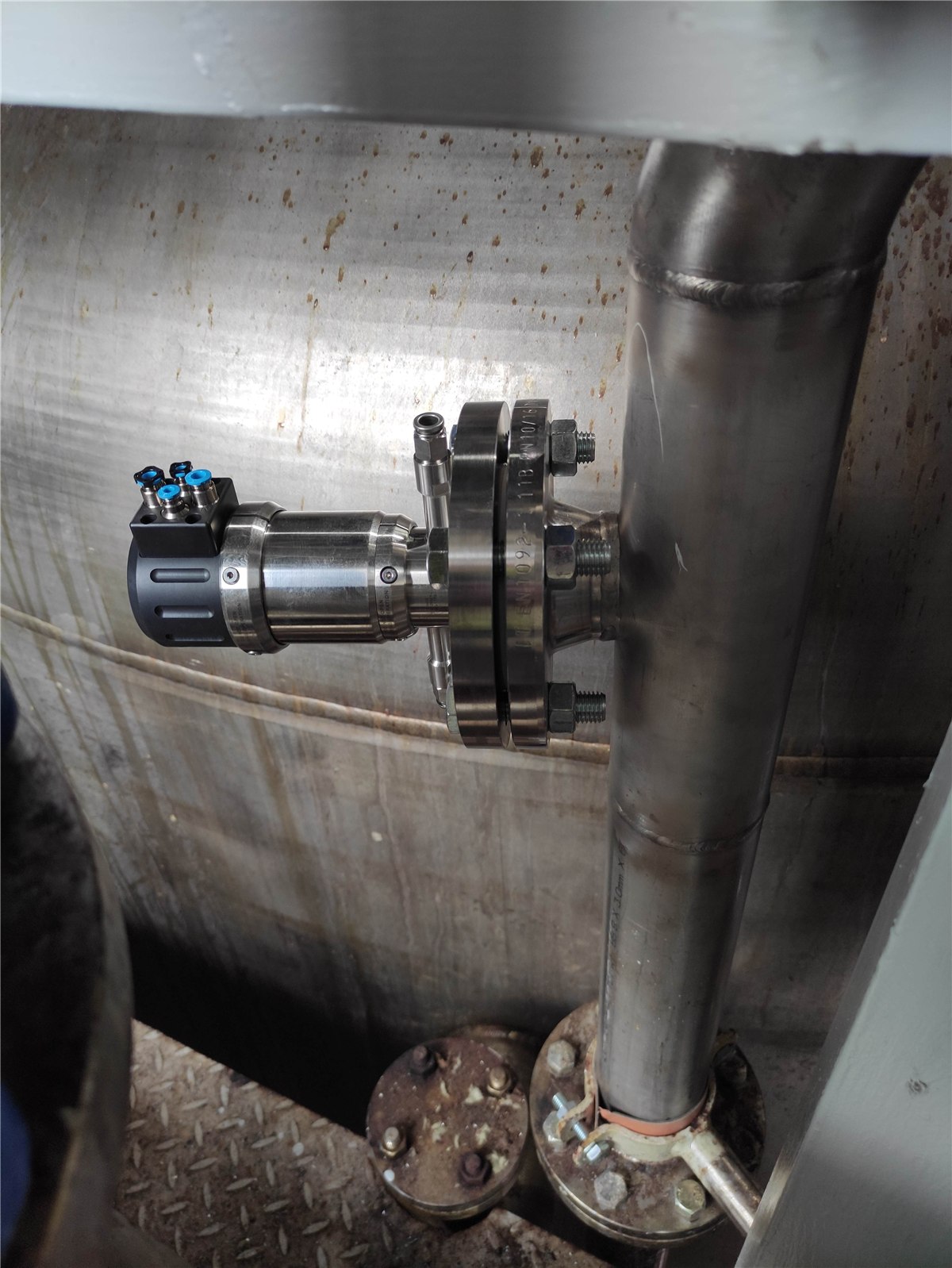
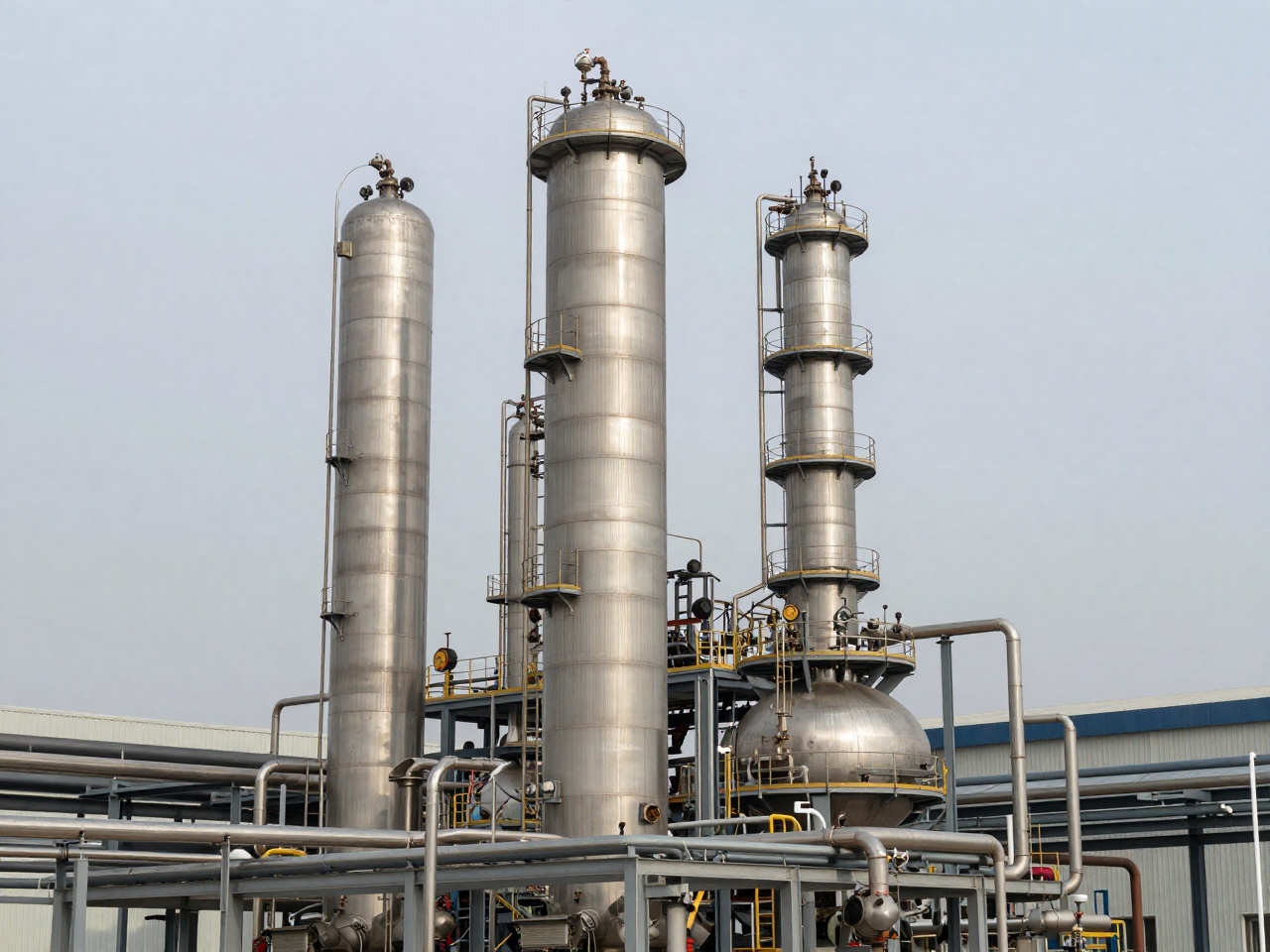
Thiosulfate is the value ATS is sold on. ATS is produced by the continuous absorption of NH₃, H₂S and SO₂ gases, so the stream is running while the number is being decided - and Spectrally reads that number in place, without pulling a sample.
Why it decides spec
ATS carries 12% N and 26% S, and thiosulfate concentration is what the product is graded on. Hold it on spec and the delivery is on spec; let it drift and the result is a customer complaint and a CE-certification problem under Regulation (EU) 2019/1009.
How it is read today
Iodometric thiosulfate titration - 20 to 30 minutes per pull, with reagents and a technician, describing a stream that has already moved on. Ion chromatography resolves the full anion picture, but at 30 to 60 minutes.
What reading it inline changes
Thiosulfate is a strong Raman-active oxyanion, so its concentration comes straight off the spectrum every few seconds, to single ppm, while the stream is still correctable. Your feasibility study on your own ATS matrix delivers the validated model and puts the accuracy figure for your chemistry in your hands, benchmarked against iodometric titration.
N/S ratio - the number that defines the product, confirmed continuously.
The nitrogen-to-sulfur ratio is what a sulfur fertilizer is specified on. It is fixed by the absorption balance, and Spectrally confirms it continuously from the same spectrum rather than once per shift.
Why it decides spec
N/S is the identity of the grade - 12% N to 26% S in ATS, and the equivalent balance in KTS, CaTS and AMS. Regulation (EU) 2019/1009 for CE fertilising products calls for documented N and S content, so the ratio is exactly what a buyer and, where required, a Notified Body reconcile.
How it is read today
The ratio is computed from separate anion results - ion chromatography at 30 to 60 minutes for the full S₂O₃²⁻ and SO₄²⁻ split - or inferred from densitometry, which returns a concentration proxy and no composition.
What reading it inline changes
N/S is confirmed live from thiosulfate concentration and solution homogeneity on one spectrum, per delivery and around the clock. The continuous, time-stamped composition record it produces strengthens the CE dossier and the answer to a customer audit.
Solution homogeneity - tank and line uniformity without spot sampling.
A concentration that reads correct on average can still be uneven across a tank or along a line. Homogeneity is the part of the picture a spot sample cannot see between pulls, and it feeds straight into the N/S ratio the customer receives.
Why it decides spec
The declared N/S ratio only holds if the solution is uniform. A stratified tank or a line that has not fully mixed ships variable product, even when the average is on spec.
How it is read today
Spot sampling at intervals - each pull sees one point at one time, and everything between pulls runs unobserved. KTS, CaTS and AMS in the same family carry the same gap.
What reading it inline changes
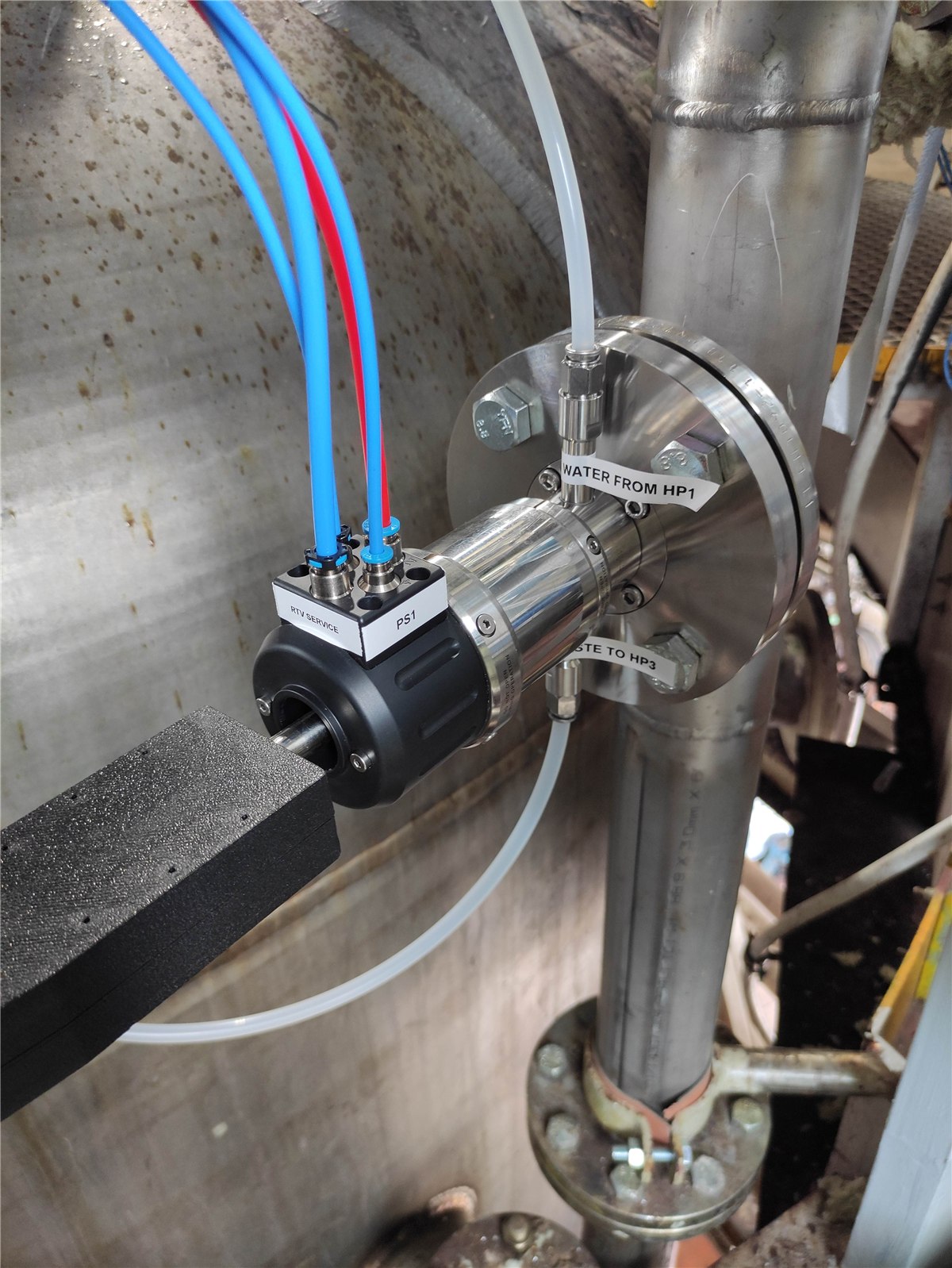
The retractable immersion probe reads the flowing stream in place, so a drift in uniformity shows in the spectrum as it happens, with no spot sampling. The self-cleaning cycle - retract, rinse, return - keeps the optical window clean without interrupting measurement, and these clear, low-fouling aqueous liquors read cleanly.
Sulfate SO₄²⁻ - a strong Raman band near 976 cm⁻¹.
The sulfate anion is a direct handle on the sulfate side of the chemistry and on stream cleanliness. In AMS (ammonium sulfate) it is the product itself; across the family it is a quality and cleanliness marker.
Why it decides spec
Sulfate content carries into the N/S balance and the declared spec, and in AMS it is the sulfate-based nitrogen-plus-sulfur product itself. It is also the cleanest cleanliness signal in a rinse-water or changeover stream.
How it is read today
Ion chromatography, 30 to 60 minutes including sample preparation - a lab loop away from the stream it describes.
What reading it inline changes
Sulfate shows a strong symmetric-stretch Raman band near 976 cm⁻¹, measured directly in a Gekko fertilizer study (FS-001), so it reads continuously off the same spectrum as thiosulfate and the ratio. In rinse water the same band is a cleanliness handle (FS-003), catching carry-over before the next grade is made.
Stream clarity and stability - drift caught in-process.
Off-trend behaviour and baseline drift are the earliest sign that a stream is moving off spec. Catching them in-process is far cheaper than catching them as a customer complaint after delivery.
Why it decides spec
ATS, KTS and AMS run as clear, low-fouling aqueous liquors, so a change in clarity or baseline stability is a genuine process signal, not noise - and it usually leads the composition numbers.
How it is read today
Noticed after the fact, when an offline result comes back or a customer flags a delivery - by which point the affected material has already shipped.
What reading it inline changes
Spectrally OS flags baseline drift and off-trend spectra as they happen, with PASS/FAIL classification and alerts to the PLC and DCS. The line is steered on the live signal, so a deviation is corrected in the stream instead of explained after it.
What comes off your critical path.
None of these methods disappears. They move from real-time gatekeeper to periodic verification - and the on-spec decision stops waiting for them. Iodometric titration and ion chromatography stay the reference method; Spectrally owns the composition side inline - thiosulfate, N/S ratio, sulfate and homogeneity. Where a standard calls for trace-metal certification, that stays with ICP: a clean division of labor.
See these values measured on your own ATS, KTS/CaTS or AMS stream.
Send representative samples or process data from your ATS, KTS/CaTS or AMS stream. We build and validate the chemometric models on your matrix and report which of these values inline Raman reads on your line, and how accurately, benchmarked against iodometric titration and ion chromatography. Your feasibility study hands you the validated model and the numbers before any commitment. Where a standard calls for trace-metal certification, that stays with ICP: a clean division of labor.